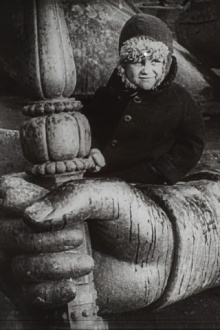
The Great Road (1927) is a Soviet silent documentary directed by Esfir Shub. Serving as the second part of her trilogy on Russian history—between The Fall of the Romanov Dynasty (1927) and Lev Tolstoy and the Russia of Nicolai II (1928)—the film chronicles the revolutionary path of the Soviet Union, assembling archival footage to depict the struggle, transformation, and aspirations of the early Soviet state.
Watch the official The Great Road 1927 trailer in HD below.
Watch Full Movies Online
Sorry, we can't find the movie trailer you're looking for.
Either a trailer for this movie has not been released yet, or it
was removed following a request from the copyright holder.
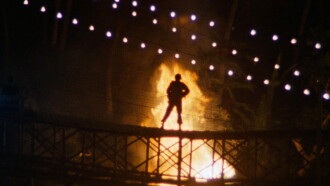
A chronicle of the production problems — including bad weather, actors' health, war near the filming locations, and more — which plagued the filming of Apocalypse Now, increasing costs and nearly destroying the life and career of Francis Ford Coppola.
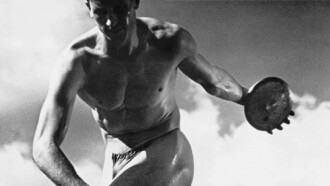
Starting with a long and lyrical overture, evoking the origins of the Olympic Games in ancient Greece, Riefenstahl covers twenty-one athletic events in the first half of this two-part love letter to the human body and spirit, culminating with the marathon, where Jesse Owens became the first track and field athlete to win four gold medals in a single Olympics.
Learn the origins and rise of modern day hula-hooping through eight extraordinary stories of hoop devotees who have embraced it as an art form, a teaching aid, and even an instrument of redemption.
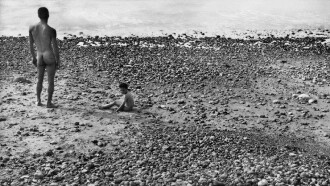
Part two of Leni Riefenstahl's monumental examination of the 1938 Olympic Games, the cameras leave the main stadium and venture into the many halls and fields deployed for such sports as fencing, polo, cycling, and the modern pentathlon, which was won by American Glenn Morris.
A documentary on the war between the Guatemalan military and the Mayan population, with first hand accounts by Nobel Peace Prize winner Rigoberta Menchú.
Ulrike Ottinger’s provocative mélange of ethnography, stunning tableaux and baroque vignettes was inspired by what she calls the “well-stocked miracle” of Korean wedding chests, assembled according to time-honored customs.
The film starts with Lantz in person slapping some paint on the bottom of a canvas, turning it over and the paint drips down to create a forest that his dog pal can live in.
Lane plays two roles: Grand Duke Algy Horseradish De Ketchup of Worcestershire and Newsboy White. The newsboy is hired by Elmer Éclair (played by Lane's younger brother, Walter Lupino) to impersonate the Duke for unstated reasons, and to attend a house party at the Smalls (a last name that leads to several puns) in the Duke's stead.