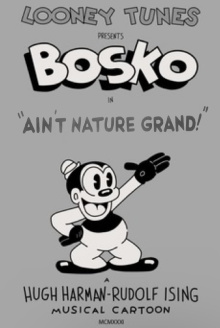
Bosko fishes, and sings and dances with frogs. But two ladybugs use a wasp as an airplane, and a beehive and tree branch as a machine gun to drive him away.
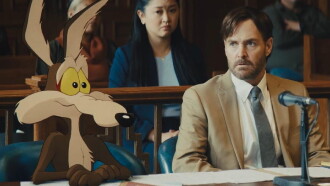
After Acme products fail him one too many times in his dogged pursuit of the Roadrunner, Wile E. Coyote decides to hire a billboard lawyer to sue the Acme Corporation.
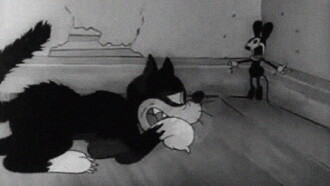
Bosko is a construction worker who impresses Honey by making music from everything in sight, including a decapitated mouse, a typewriter and a goat filled with hot air.
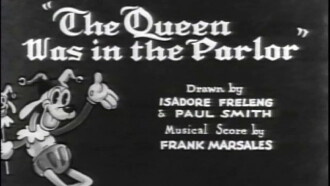
The last Goopy Geer cartoon. The king returns to his castle, and asks where the queen is; she's in the parlor, and won't be seen, according to the title song.
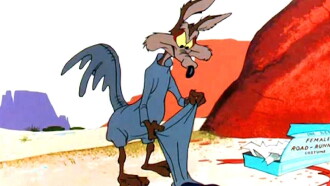
Among the strategies that fail in Wile E. Coyote's attempts to catch the Roadrunner: glue on the road, a giant rubber band, an outboard motor in a wash tub, and dressing in drag as a female Roadrunner.
Katusha, a country girl, is seduced and abandoned by Prince Nekludov. Nekludov finds himself, years later, on a jury trying the same Katusha for a crime he now realizes his actions drove her to.
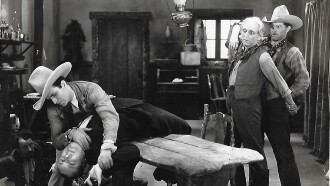
Jeremy Wales, a crook who stays on the safe side of the law but bends it whenever possible,has tricked short-sighted John 'Dad" Saunders to sign a note for ten thousand dollars instead of the one thousand that Saunders borrowed to work his "Rose o' My Heart" mine.