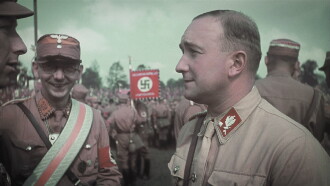
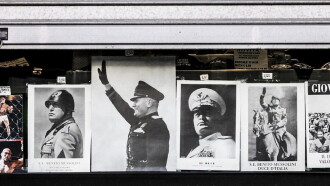
One of the key works in creating the American social documentary film, this 1934 newsreel compilation crams a lot of information into just 11 minutes. Skillfully edited, the picture captures a panorama of international events centered on the labor movement. Scenes include Mussolini, Hitler and FDR preparing for war, Nazi soldiers persecuting German Jews, a political strike in Paris, the Scottsboro demonstration in Washington, DC, police violence against striking steelworkers in Pennsylvania and union members stopping scab workers from delivering milk during a dairy farmers strike in Wisconsin. Under the direction of pioneering documentarian Leo Hurwitz, the images are edited together to create a powerful image of a world that, in his view, desperately needed radical change.
The story of New Zealander Helen Todd's law suit against an Indonesian general that she pursued after her son, Kamal, was shot dead in the Dili massacre in East Timor.
Through first person narration, Tari reveals personal stories related to her decision to work in Taiwan, her strained family relationships, the risks involved in working abroad and the traps she has fallen into.
What would your family reminiscences about dad sound like if he had been an early supporter of Hitler’s, a leader of the notorious SA and the Third Reich’s minister in charge of Slovakia, including its Final Solution? Executed as a war criminal in 1947, Hanns Ludin left behind a grieving widow and six young children, the youngest of whom became a filmmaker.
A powerful depiction of war in infamous global conflict zones. Directed by Oscar/Emmy documentary makers Buddy Squires and Graeme Scott (know for Sam Smith), this film provides a rare and powerful insight into humanity and hope in the depth of war and the greatest global humanitarian crisis of the last several decades.
Using unpublished photos taken by Italian war photographer Enrico Sarsini, and the reconstruction of key events, this film examines the battle for a strategically-located church that was defended by Azerbaijani teenager Natig Gasimov.
A Nazi propaganda film meant to glorify German history and to persuade people that the Teutons weren't barbarians but had a notable culture of their own.
Bobby Clark and Paul McCullough take to the streets as pots and pans salesmen, wreaking havoc door to door with their demonstrations of their cookware.