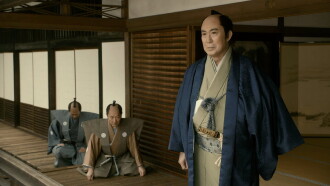
When a civil war threatens to break out, two geishas flee from their village with aristocrats. During the long journey, the socially inferior women prove to be morally superior to their betters.
At the beginning of the Meiji era, Sayoko, the daughter of a large banker in Tokyo, comes to Sotobo's villa for the first time in eight years, guided by her student, Yasu.
A genius and reckless poet and a hard working musician are asked by the CEO of a children literature magazine to write a war song to send children into the battlefield.
Lady Snowblood is caught by the police and sentenced to death for her crimes. As she is sent to the gallows she is rescued by the secret police who offer her a deal to assassinate some revolutionaries.
Toichi is a boatman who ferries the villagers to a town on the other side of the river. Besides rowing a boat for the villagers all day long, he barely communicates with anyone except Genzo, a young neighbour.
The film depicts carnivalesque atmosphere summed up by the cry "Ei ja nai ka" ("Why not?") in Japan in 1867 and 1868 in the days leading to the Meiji Restoration.
Men on horseback and their dogs are hot on the trail of a sly fox. In this takeoff on the old Pied Piper fable, the hungry fox gets in the way of the flute playing.
Playwright Jacques Deval directed this 1935 adaptation of his own stage comedy Tovaritch. Set in Paris, the story revolves around Princess Tatiana (Irene de Zilaby) and General Mikail (Andre Lefaur), two members of the Russian nobility who'd been forced to relocate to France after the Revolution.
A brilliant but deranged neurosurgeon becomes obsessively fixated on a judge's daughter. With the help of an escaped criminal whose face he has surgically deformed, the mad man lures her, her father, and her fiancé to his isolated, castle-like home.