A 1936 documentary film about the London to Portsmouth railway. A lesser known contemporary of Night Mail, also featuring the music of Benjamin Britten and poetry of W.H. Auden.
This short is one of Paramount's "Popular Science" series (number L6-5, or the fifth one of the 1946-47 production season) and begins by showing moon rockets, weighing 30 tons, a flight in the ionosphere, with mounted color cameras recording pictures hundreds of miles above the earth.
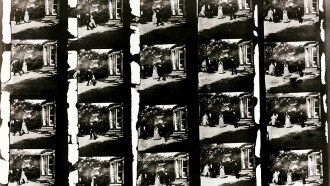
The earliest surviving motion-picture film, and believed to be one of the very first moving images ever created, was shot by Louis Aimé Augustin Le Prince using the LPCCP Type-1 MkII single-lens camera.
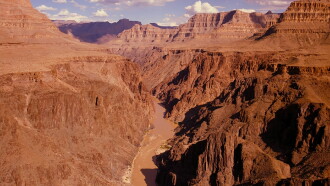
Filmed in IMAX, a team of explorers led by Pasquale Scaturro and Gordon Brown face seemingly insurmountable challenges as they make their way along all 3,260 miles of the world's longest and deadliest river to become the first in history to complete a full descent of the Blue Nile from source to sea.
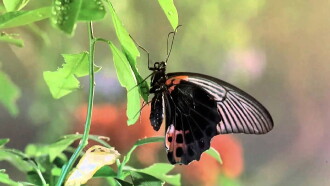
Explore the extraordinary hidden world of insects, where a leaf weighs more than a car, rain drops feel like exploding hand grenades and a blade of grass soars like a skyscraper.
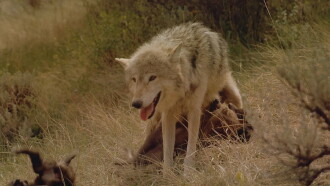
A look at the great wolf debate with comments and views from people on both sides. It also contains footage of Natives dressing up & doing tribal dances.
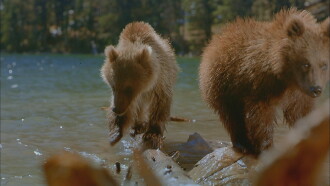
From polar bears in the arctic tundra to black bears in the Northern Rockies, you'll see some of the most spectacular footage ever shot of these enterprising omnivores.
Film portrays the expedition of the British explorer David Livingstone to Africa to discover the source of the Nile, his disappearance, and the expedition to find him led by Stanley.
Little Elmer Elephant has a crush on Tillie Tiger and his affection is reciprocated. Trouble is, the pint-sized pachyderm is beset by bullies who ridicule his trunk and make his life miserable.
Confederate Col. Lafe Harvey (Earl Ross) travels home after the Civil War, where he must tell his niece, Betty (Frances Grant), that her father is presumed dead.
A bumbling tramp desires to build a home with a young woman, yet is thwarted time and time again by his lack of experience and habit of being in the wrong place at the wrong time.
Joyce Reid, a wealthy young debutante, stows away on a cargo ship to China, carrying as passengers her dashing aviator sweetheart, Dan Bailey and and her munitions-producing father, E.
Oswald the Rabbit and his little brother catch the Slumberland Express and it carries the assorted animals to childhood's dream of paradise - an amusement park where all the games are free, and windows are provided just to be broken by an abundant supply of free rocks, and old men wear silk hats to provide targets for snowballs.
Comments
Have you watched The Way to the Sea yet? What did you think about it?