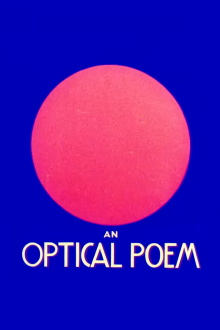
A dance of shapes. A title card tells us this is an experiment in conveying the mental images of music in a visual form. Liszt's "Second Hungarian Rhapsody" is the music. The shapes, all two-dimensional, are circles primarily, with some squares and rectangles, and a few triangles. The shapes move rhythmically to the music: receding from view or moving across the screen. Red circles on a blue background; light blue squares; white rectangles. Then, a red background of many circles with a few in the foreground. Red gives way to blue then to white. Shapes reappear as Liszt's themes re-occur. Then, with a few staccato notes and images, it's over.
Walt Disney's timeless masterpiece is an extravaganza of sight and sound! See the music come to life, hear the pictures burst into song and experience the excitement that is Fantasia over and over again.
Jenny is young. Her life is over. She killed someone. And she would do it again. When an 80-year-old piano teacher discovers the girl’s secret, her brutality and her dreams, she decides to transform her pupil into the musical wunderkind she once was.
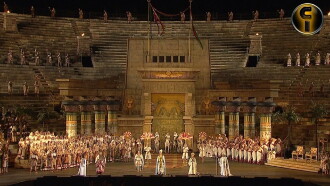
The grand scale and magnificent acoustics of the Roman arena in Verona are ideally suited to the pageantry of Verdi's Egyptian opera, presented here in a staging that is true to the original 1913 production, framed by obelisks and sphinxes and filled with chorus and dancers.
After the great success of his Beethoven cycle, Christian Thielemann now turns with his new orchestra, the Staatskapelle Dresden, to the symphonic work of Johannes Brahms.
Known for his mournful "Adagio for Strings," Samuel Barber was never quite fashionable. This acclaimed film is a probing exploration of his music and melancholia.
Barcelona’s Palau de la Música Catalana, one of the world’s most beautiful concert halls, hosted Gustavo Dudamel and the Münchner Philharmoniker with an unforgettable performance of Mahler’s Symphony No.
More movie trailers, teasers, and clips from An Optical Poem:
An Optical Poem (1938) - Classic Short Film
The short film An Optical Poem 1938 by the celebrated German-born abstract film-maker Oskar Fischinger in its entirety composed to Franz Liszt's 2nd.
An Optical Poem - produced by Oskar Fischinger 1938
An Optical Poem produced by Oskar Fischinger for MGM 1938 7 minutes Music by Franz Liszt I hold no specific rights to this film footage but present it here for ...
An Optical Poem (1938) - Classic Short Film
The short film An Optical Poem 1938 by the celebrated German-born abstract film-maker Oskar Fischinger in its entirety composed to Franz Liszt's 2nd.
Popular movie trailers from 1938
These some of the most viewed trailers for movies released in 1938:
This comical campus romance showcases the fancy footwork of All-American basketball player Hank Luisetti while it tells the story of a dean's son who does his very best to become a good student.
A cocky young Marine who's alienated many of his fellow soldiers with his smart-aleck, wiseguy attitude gets a "wake-up call" when his unit comes under attack by bandits.
Pre-war intelligence man Tommy Blythe interrupts his honeymoon to investigate the discovery of vital Air Ministry blueprints on a woman killed in a London road accident.
The underage Rosemarie is still too young to run her inherited farm by herself; but she's more than aware that her foster father and the farm's administrator, the farmer Schlieker, is constantly skimming from the farm's finances to line his own pocket.
Reflecting the filmmaker's passion for automobiles, who in his youth participated in car races, the film portrays the attempt to manufacture a new model in the Ford factory in the city of Porto.
A western town is being overrun and ruled by a gang of outlaws led by Bart (John Merton). Former Ranger Tim (Tim McCoy) is called out of retirement and assigned to clean up the gang.
This film was mainly shot in the Japanese skiing resort Hokkaido in 1937-38 and was intended to create support for the coming winter olympics of 1940 in Japan which however were cancelled because of the Japanese-Chinese war.
Comments
Have you watched An Optical Poem yet? What did you think about it?