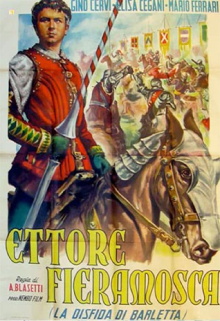
ETTORE FIERAMOSCA was based on a widely-read literary action epic by Massimo D'Azeglio, published in 1833. Translated to the screen in 1938 by the most important director of the Italian fascist period, Alessandro Blasetti, it was intended to boost current patriotic fervor and pride in the Italian nation, and it contributed to a revival of Italian nationalism.
More movie trailers, teasers, and clips from Ettore Fieramosca:
Ettore Fieramosca - Film Completo/Full Movie
Nel 1503 Francesi e Spagnoli si contendono la regione circostante il castello siciliano di Morreale. Giovanna la bella castellana sogna di liberarsi dal giogo ...
Cinema di regime Ettore Fieramosca 1938 A Blasetti G Cervi avi
Ettore Fieramosca full hd movie trailer.
Ettore Fieramosca di Blasetti. Pastiche
Ettore Fieramosca 1938. Diretto da Alessandro Blasetti. Sceneggiatura di Blasetti Cesare Vico Ludovici Augusto Mazzetti e Vittorio Nino Novarese. Interpreti ...
Ettore Fieramosca scena bagno Clara Calamai uncut
Scene iniziali del Film Ettore Fieramosca con Gino Cervi girato per il mercato estero. La versione per il mercato italiano è stata in parte censurata.
ettore fieramosca 5-6.wmv
Ettore Fieramosca full hd movie trailer.
ettore fieramosca 6-6.wmv
Ettore Fieramosca full hd movie trailer.
Popular movie trailers from 1938
These some of the most viewed trailers for movies released in 1938:
Three mice run, cavort, sing and dance around in the stores and restaurants a big city at night. They wind up in a café for an early-morning snack and stocking up on food provisions before they return to the safety of their den beneath a man-hole cover in the street.
Pre-war intelligence man Tommy Blythe interrupts his honeymoon to investigate the discovery of vital Air Ministry blueprints on a woman killed in a London road accident.
Donald's sister Dumbella sends her three sons Huey, Dewey, and Louie to visit their uncle Donald. They prove to be quite a handful for Donald, even with help from his book on child rearing.
Reflecting the filmmaker's passion for automobiles, who in his youth participated in car races, the film portrays the attempt to manufacture a new model in the Ford factory in the city of Porto.
A western town is being overrun and ruled by a gang of outlaws led by Bart (John Merton). Former Ranger Tim (Tim McCoy) is called out of retirement and assigned to clean up the gang.
The Cabin Kids, in between song and dance numbers, are at the county fair with intentions, fair or foul, of helping Mammy win the Pancakes cooking contest.
Comments
Have you watched Ettore Fieramosca yet? What did you think about it?