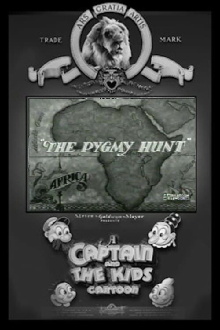
The Captain runs a safari business. He sets off to catch a live pygmy, with help from a tracking dog, but the dog isn't the world's most efficient, distracted first by some flowers, then when he actually encounters a pygmy, by the bone in his hair. Ultimately, he buries the pygmy; the Captain comes chasing along. With this crew, the pygmy's in no danger. Eventually, the pygmy swaps clothes with the Inspector; he runs off and grabs his whole tribe, and the safari crew takes off.
Reflecting the filmmaker's passion for automobiles, who in his youth participated in car races, the film portrays the attempt to manufacture a new model in the Ford factory in the city of Porto.
Three mice run, cavort, sing and dance around in the stores and restaurants a big city at night. They wind up in a café for an early-morning snack and stocking up on food provisions before they return to the safety of their den beneath a man-hole cover in the street.
This film was mainly shot in the Japanese skiing resort Hokkaido in 1937-38 and was intended to create support for the coming winter olympics of 1940 in Japan which however were cancelled because of the Japanese-Chinese war.
In the village of Sableuse, the local manor has been bought out by a nouveau riche, Emile Cousinet. When his wife Lisette, a former music hall actress, flees to Paris with young Pierre de Sableuse, Cousinet asks Father Pellegrin, the village vicar, to bring the lost sheep back home.
In an effort to impress Darla, Alfalfa tells her that he's a famous bear trainer. Little does he know that Darla's father owns a circus - and a bear costume.
Anton Chekhov’s one-act comic play throws Elena Ivanonva Popova, a land-owning widow with dimples, on her cheeks up against Grigory Stepanovitch Smirnov, a middle-aged landowner.
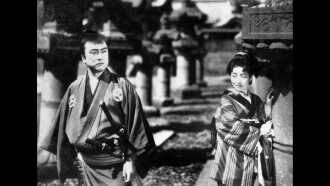
The vassals of the Asano clan, who surrendered the castle & became wanderers, deceive the enemy and the public, wait for an opportunity to avenge their master and his family.