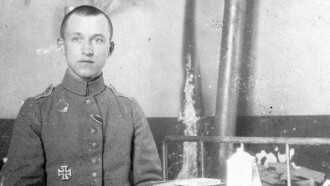
102 Years in the Heart of Europe: A Portrait of Ernst Jünger (Swedish: 102 år i hjärtat av Europa) is a Swedish documentary film from 1998 directed by Jesper Wachtmeister.
Between 1942 and 1944 some 24,916 Jews were deported from Belgium to Auschwitz. The roundups and deportations were organized and carried out by the Nazis with the - not always conscious - cooperation of Belgian authorities.
The extraordinary story of how Hollywood changed World War II – and how World War II changed Hollywood, through the interwoven experiences of five legendary filmmakers who went to war to serve their country and bring the truth to the American people: John Ford, William Wyler, John Huston, Frank Capra, and George Stevens.
When Winston Churchill needed the help of the US Army to defeat Hitler, he made a controversial decision to allow America to bring its segregated Army to the UK.
Actual footage by the United States Signal Corps of the landing and attack on Arawe Beach, Cape Glouster, New Britain island in 1943 in the South Pacific theatre of World War Two, and the handicaps of the wild jungle in addition to the Japanese snipers and pill-box emplacements.
After the World War I, Mussolini's perspective on life is severely altered; once a willful socialist reformer, now obsessed with the idea of power, he founds the National Fascist Party in 1921 and assumes political power in 1922, becoming the Duce, dictator of Italy.
Using never-before-seen footage, Japan's War In Colour tells a previously untold story. It recounts the history of the Second World War from a Japanese perspective, combining original colour film with letters and diaries written by Japanese people.
Popular movie trailers from 1940
These some of the most viewed trailers for movies released in 1940:
This movie's preamble explains the importance of salesmanship after the great depression The industrial revolution has created a life of modern convenience for America, and there are more products available than most people can fathom.
The heartbreaking but hopeful tale of Danny Kenny and Peggy Nash, two sweethearts who meet and struggle through their impoverished lives in New York City.
In this Warner Bros. short film, Alex visits his sister Belinda and her husband Fred. It looks like Alex is going to be around for a while, much to Fred's displeasure.
Benchley, in his own unique way, starts to drive his wife crazy. First he waits until just as she is serving dinner before he goes to wash his hands and shave.