The film is set to the music of Franz Schubert and is very strange. Much of it consists of disembodies arms and legs all moving about to the music. There are also folks in body suits moving rhythmically to the tune. Occasionally, there are shots of a guy in full color with multiple exposures.
The film describes the microcosmos of the small village Wacken and shows the clash of the cultures, before and during the biggest heavy metal festival in Europe.
An archival documentary about the U.S. military’s response to the political and racial injustices of the late 1960s: take a military base, build a mock inner-city set, cast soldiers to play rioters, burn the place down, and film it all.
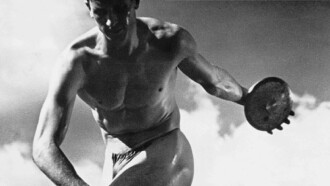
Starting with a long and lyrical overture, evoking the origins of the Olympic Games in ancient Greece, Riefenstahl covers twenty-one athletic events in the first half of this two-part love letter to the human body and spirit, culminating with the marathon, where Jesse Owens became the first track and field athlete to win four gold medals in a single Olympics.
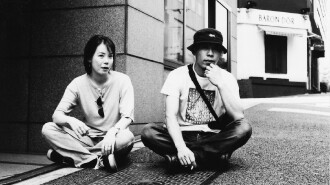
A photographer and a filmmaker challenge each other to shoot—one to photograph the other to film—two young actresses, one from Tokyo, the other from the countryside.
Part two of Leni Riefenstahl's monumental examination of the 1938 Olympic Games, the cameras leave the main stadium and venture into the many halls and fields deployed for such sports as fencing, polo, cycling, and the modern pentathlon, which was won by American Glenn Morris.
Every summer, a renowned chamber music festival takes place in the small Finnish town of Kuhmo. Musicians and guests from all over the world populate the streets and enjoy nature.
Harry Schein was an anomaly in Swedish cultural society. Equal parts playboy, intellectual, and political visionary, his life story could very well be the foundation of a Hollywood film.
SWIM TEAM chronicles the overwhelming struggles and extraordinary triumphs of 3 young athletes with autism and shows how a swim team can bring hope to a community.
Nine fictitious documentaries and films reflect the mood of late 1970s Germany, particularly the two-month period in 1977 when a businessman was kidnapped by the RAF (Red Army Faction).
After losing nearly all of an inheritance to taxes, sisters Kay and Barbara Latimer, waitresses at a drive-in restaurant in Texas, scheme to find rich husbands.
Based on a Victor Hugo play, and scored with music from the later opera by Giuseppe Verdi, the film tells about a hunchbacked clown whose beautiful daughter falls in love with the lecherous king.
The title might sound shocking, but the red hands mean, the hands which drag fishnets. Ohama, 15 or 16 years old girl lost her family and lived alone in a fishermen's village.
Julius Berge has an advertising firm in Stockholm together with his wife Sonja. The man with the ideas is their colleague Kurt Dal, who used to be engaged to Sonja.
The story of a rich man's son who has just reached the age of adolescence. With his money and good looks, he starts out to conquer the world, especially the feminine world thinking he is the master of everything because of his financial and social standing.
This short starts out as a documentary. In a dramatization, Eadward Muybridge's photographic experiments prove that when a horse gallops, there are times when all four of the animal's feet are off the ground.