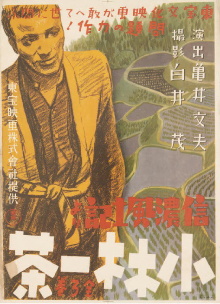
The film uses the haiku of early 19th century poet Kobayashi Issa as its motif to portray the lives of farmers residing deep in the mountains of Nagano. Commissioned by the Nagano Prefectural Department of Tourism, the movie became instead, in the hands of Kamei, a depiction, sometimes ironic, of poverty and the harsh life of the inhabitants of the area. The short movie is often considered Japan’s first “poetic documentary”.
Wild Bill Hickock (William Elliott), aka The Peaceable Man, meters out justice in the tough town of Deadwood in this highly fictional western from Columbia.
In this musical comedy, a pregnant disc jockey misses her husband who is fighting overseas. Stressed out by the situation and her job, she decides to take some time off and convinces her twin sister to trade places with her.
Muslims and Crusaders conclude a truce during Richard the Lionheart's illness, and young Arabs seize this opportunity to join their armies in Jerusalem.
Serials usually spawned feature film versions, but with this film, it was the other way around. A 1932 Buck Jones Western, White Eagle was made into a serial nine years later, again starring Jones in the title role, a (supposedly) Native American Pony Express Rider defending his people against a gang of evil Whites.
When his car breaks down out in the country, Sniffles the mouse takes shelter in an old mill, where he meets up with "Batty," a non-stop-talking little bat who later save Sniffles from a hungry cat.
A college girl (Bonnie Kildare) dreams of her boyfriend (Johnny Downs) as he sings her a love song. The song begins at graduation ceremony and eventually moves to a soda fountain.
Comments
Have you watched Kobayashi Issa yet? What did you think about it?