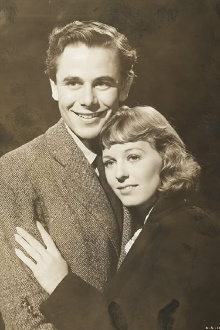
When 22-year-old Rainer Werner Fassbinder storms the stage of a small, progressive theatre in Munich 1967, and seizes the production without further ado, nobody suspects this brazen young rebel to become one of the most important post-war German filmmakers.
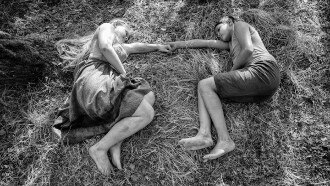
It is summer 1944. The war is far away from Slovak mountains for the time being. The head of forest management Borodác brings a new employee to complete the eight woodcutters work team of Czechs, Slovaks and one Pole - the young guy is Martin Uher, a former clerk form Prague.
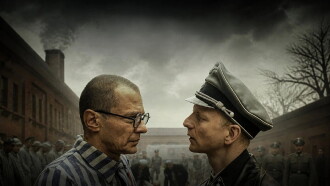
Located nearly 80 kilometres north of Berlin, Germany, the former municipality of Ravensbrück was home to a prison between 1939 and 1945 that became a concentration camp designed specifically for women.
The extraordinary true story of St. Maximilian Kolbe, a Polish Catholic priest who volunteered to die in place of another man in Auschwitz during World War II.
Tells the story of climate refugees across six continents, celebrating the voices and experiences of people living at the forefront of the climate crisis, displaced from their homes by climate disasters.
Czechoslovakia, 1941. As the war continues, Reich Protector Reinhard Heydrich arrives in Nazi-occupied Prague and establishes a regime of terror that will force freedom fighters to act.
Serials usually spawned feature film versions, but with this film, it was the other way around. A 1932 Buck Jones Western, White Eagle was made into a serial nine years later, again starring Jones in the title role, a (supposedly) Native American Pony Express Rider defending his people against a gang of evil Whites.
After Hou Yao moved to Singapore in 1940, he continued to work for the Shaw Brothers under Malay Film Productions and made a handful of films, including Bermadu and Hanchor Hati, before being murdered in 1942.
Based on a Victor Hugo play, and scored with music from the later opera by Giuseppe Verdi, the film tells about a hunchbacked clown whose beautiful daughter falls in love with the lecherous king.