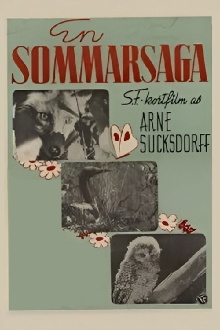
Arne Sucksdorff’s first film for Svensk Filmindustri, this lyrical short follows a fox cub through his playful explorations and predatory instincts in the Swedish forest. Blending moments of enchantment with unsentimental depictions of cruelty, the film captures the cycle of survival among animals with striking rhythmic editing and sensuous close-ups of fur, eyes, and forest textures. Rich in light and detail, Summer’s Tale became an enormously popular nature film and established Sucksdorff’s reputation for poetic documentary.
A fictional documentary that portrays the city of Dakar, Senegal, as we hear the conversation between a Senegalese man (the director, Djibril Diop Mambéty) and a French woman, Inge Hirschnitz.
Working men and women leave through the main gate of the Lumière factory in Lyon, France. Filmed on 22 March 1895, it is often referred to as the first real motion picture ever made, although Louis Le Prince's 1888 Roundhay Garden Scene pre-dated it by seven years.
Evocation of the Oradour-sur-Glane Massacre on 10 June 1944, when 642 of its inhabitants were slaughtered by a Nazi Waffen SS company, based on a visit to Diors' Museum of the Three Wars" and archive photographs.
When Edward Creighton leads the construction of the Western Union to unite East with West, he hires a Western reformed outlaw and a tenderfoot Eastern surveyor.
A college girl (Bonnie Kildare) dreams of her boyfriend (Johnny Downs) as he sings her a love song. The song begins at graduation ceremony and eventually moves to a soda fountain.