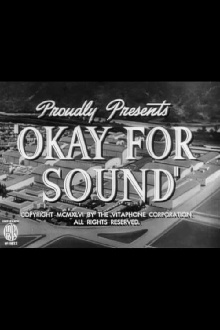
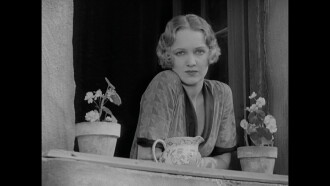
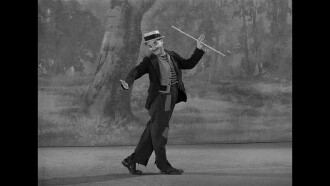
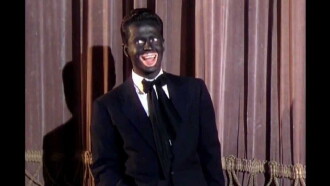
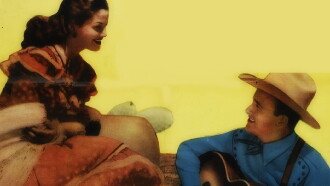
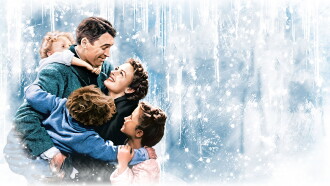
This short was released in connection with the 20th anniversary of Warner Brothers' first exhibition of the Vitaphone sound-on-film process on 6 August 1926. The film highlights Thomas A. Edison and Alexander Graham Bell's efforts that contributed to sound movies and acknowledges the work of Lee De Forest. Brief excerpts from the August 1926 exhibition follow. Clips are then shown from a number of Warner Brothers features, four from the 1920s, the remainder from 1946/47.
This is not merely another film about cinema history; it is a film about the love of cinema, a journey of discovery through over a century of German film history.
Released two years after James Dean's death, this documentary chronicles his short life and career via black-and-white still photographs, interviews with the aunt and uncle who raised him, his paternal grandparents, a New York City cabdriver friend, the owner of his favorite Los Angeles restaurant, outtakes from East of Eden, footage of the opening night of Giant, and Dean's ironic PSA for safe driving.
Working men and women leave through the main gate of the Lumière factory in Lyon, France. Filmed on 22 March 1895, it is often referred to as the first real motion picture ever made, although Louis Le Prince's 1888 Roundhay Garden Scene pre-dated it by seven years.
A tribute to the late, great French director Francois Truffaut, this documentary was undoubtedly named after his last movie, Vivement Dimanche!, released in 1983.
When Francois Truffaut approached Alfred Hitchcock in 1962 with the idea of having a long conversation with him about his work and publishing this in book form, he didn't imagine that more than four years would pass before Le Cinéma selon Hitchcock finally appeared in 1966.
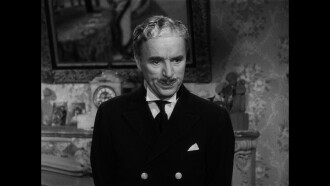
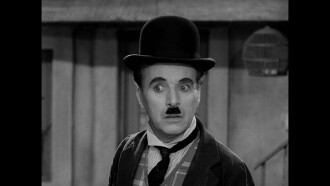
A short documentary in the Chaplin Today series about Chaplin's "Monsieur Verdoux." Includes an interview with Claude Chabrol, whose 1963 film "Landru" concerns the same serial killer that inspired Chaplin's film.
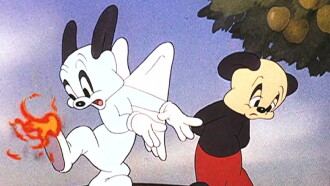
Andy Panda is very fond of apples and he eats a bushel of green apples, falls asleep and has a nightmare in which the devil is trying to entice him into Hades and stuffs him full of apple juice, applesauce and more apples.
A plain-Jane math professor (Joan Davis) at a small midwestern college is talked into journeying to New York on behalf of a colleague who has written a steamy bestseller under an assumed name.
All-American singing cowboy Jimmy Wakely went below the border in this musical Western from the assembly line at Monogram, performing such ditties as Adios Mariquita Linda, Rose of the Rancho, the inevitable La Cucaracha, and his own title tune.