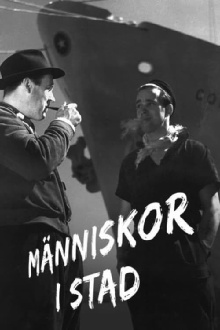
An impressionistic short film celebrating Stockholm’s rhythms of life, blending images of its streets, waterways, people, and architecture into a visual “symphony.” Winner of the Academy Award (Oscar) for Best Short Subject, One-Reel in 1949 — the first Swedish film ever to receive an Oscar.
"The theme of the film HIDDEN CITIES is personal urban perceptions, which we call 'the city'. The city, as a living organism, reflecting social processes and interactions, economic relations, political conditions and private matters.
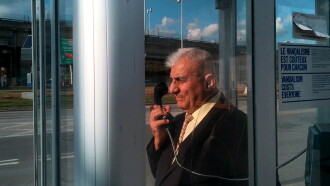
Bathed in the uncanny glow of late afternoon sun and set against a noisy highway, Interchange depicts the melancholy and isolation of a small working-class neighborhood on the outskirts of Montreal.
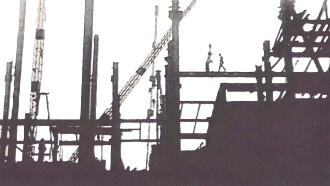
A day in the city of Berlin, which experienced an industrial boom in the 1920s, and still provides an insight into the living and working conditions at that time.
An experimental meditation on Times Square's marquees and iconic advertising that captures the concurrently seedy and dazzling aspects of New York's Great White Way.
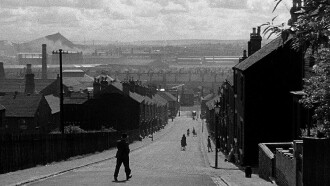
Belfast, it's a city that is changing, changing because the people are leaving? But one came back, a 10,000 year old woman who claims that she is the city itself.
"The Hart of London" is an endlessly layered tour de force. It explores life and death, the sense of place and personal displacement, and the intricate aesthetics of representation.
Slip and Sach are working for a local newspaper as a reporter and photographer, respectively. Slip wants to get the goods on a local gambling ring that is fixing sporting events, so he and Sach go undercover to expose the ring.
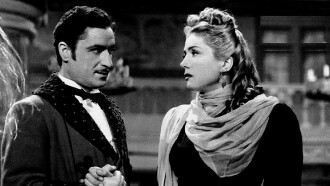
Paris, 1857. While on trial for moral outrage, French writer G. Flaubert tells the court and the audience the true story of the heroine of his novel Madame Bovary, a sensitive but capricious woman whose desperate efforts to overcome the bourgeois conventions of a dull, provincial life led her family first to ruin and disrepute and finally to the abyss of tragedy.
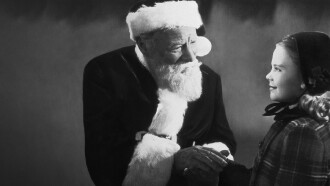
Kris Kringle, seemingly the embodiment of Santa Claus, is asked to portray the jolly old fellow at Macy's following his performance in the Thanksgiving Day parade.
Maggi continues her forever-ever efforts to crash Manhattan's top society, while Jiggs still mingles with his old construction cronies at the bar of Dinty Moore on 10th Avenue.