"Islam" by Georges Régnier (1949) is a documentary about Islamic art in Algeria, Tunisia, Morocco, and Spain. The documentary received a special mention at the Venice Film Festival in 1949. Georges Régnier, a French documentary filmmaker active in the post-war period, was interested in North African cultures and colonial issues. In this film, he traces the history of Islam and its architectural art across these regions, and describes the expansion of Islam from Arabia to the Maghreb and Andalusia, highlighting mosques, minarets, and palaces such as those in Kairouan, Algiers, and Marrakech, all accompanied by the sounds of the Arabic call to prayer.
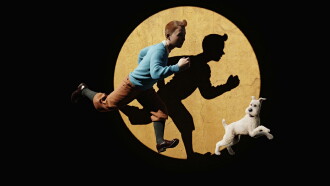
Intrepid young reporter, Tintin, and his loyal dog, Snowy, are thrust into a world of high adventure when they discover a ship carrying an explosive secret.
Deceived that he had won the Prize, Connor MacLeod wanders through the world; however, he is awakened from his peaceful life when an entombed immortal magician, Kane, escapes and comes seeking the Highlander.
Néfissa, a student in Algiers, returns to her village in the south in the summer. Her father wants her to marry the mayor but she wants to continue her studies.
Alain Lefevre is a boxer paid by a Marseille mobster to take a dive. When he wins the fight he attempts to flee to America with the mobster's girlfriend Katrina.
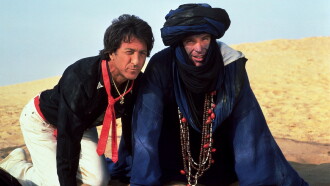
Two terrible lounge singers get booked to play a gig in a Moroccan hotel but somehow become pawns in an international power play between the CIA, the Emir of Ishtar, and the rebels trying to overthrow his regime.
Allal, a street vendor who sells vegetables to cover the expenses of treating his seriously ill daughter, decides to travel to another city due to bad conditions.
Paul and Barry set off for Morocco in search of an old treasure map which is being used as a table cloth in a restaurant and end up on a mad-cap adventure.
The Atlantic, an Ocean of Opportunities follows the Atlantic Initiative of King Mohammed VI, an ambitious vision to transform Morocco's Atlantic coast into a driver of economic development and regional cooperation.
Popular movie trailers from 1949
These some of the most viewed trailers for movies released in 1949:
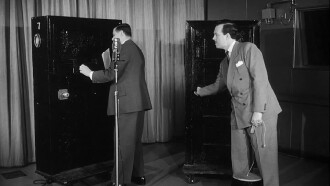
Familiar radio voice Ben Grauer leads the viewer on a behind the scenes tour of the National Broadcasting Company studios -- both radio and television -- in Rockefeller Center and Hollywood.
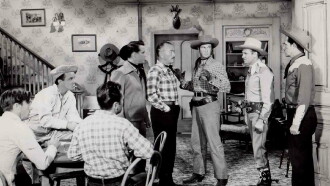
Jack Garrett interrupts a stagecoach holdup where he meets Fuzzy (The town's stagecoach driver, station agent, baggage agent, and sheriff) and banker Jim Thorn.
In this remake of and using stock-footage from 1941's "Arizona Cyclone," Tex is a daredevil freight-line driver who, with the aid of his pals Smokey and Deuce, wipes out the crooked rival line, and has enough time left over, from this shorts' twenty-six minutes , to toss in four songs.
A disfigured woman is helped by a talented composer to recover her face with plastic surgery. Then he discovers that she's a beautiful woman and a talented singer.
Comments
Have you watched Islam yet? What did you think about it?