"Whenever You Eat" (1949) is an educational film produced by the National Dairy Council and Atlas Film Corp, emphasizing the importance of physical well-being and its connection to good living habits and a proper diet. Through a 12-minute narrative, the film likely promotes balanced nutrition, healthy eating routines, and the role of dairy in maintaining overall health. Targeting families, students, and general audiences, it serves as a mid-century public health message encouraging better dietary choices for improved daily life and long-term wellness.
FRONTLINE and NPR investigate the growing inequities in American healthcare exposed by COVID-19. The Healthcare Divide examines how pressure to increase profits and uneven government support are widening the divide between rich and poor hospitals, endangering care for low-income populations.
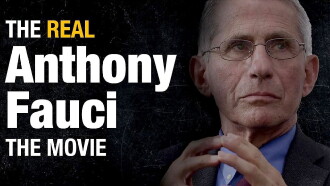
Different experts make a stand against today's putatively criminal and harmful health system, focusing on Anthony Fauci and his role in the shaping of the AIDS and COVID-19 epidemics.
Morgan Spurlock subjects himself to a diet based only on McDonald's fast food three times a day for thirty days without exercising to try to prove why so many Americans are fat or obese.
We have had too much medicine for too many years. The time to act is now. How one doctor's fight against corporate greed led to an ancient, life-changing solution for heart disease.
A documentary film that takes us on a scientific and spiritual journey where we discover that by changing one's perceptions, the human body can heal itself from any disease.
Narrated by Academy Award winners Sissy Spacek and Herbie Hancock, River of Gold is the disturbing account of a clandestine journey into Peru's Amazon rainforest to uncover the savage unraveling of pristine jungle.
Letter Beyond the Walls reconstructs the trajectory of HIV and AIDS with a focus on Brazil, through interviews with doctors, activists, patients and other actors, in addition to extensive archival material.
With nutritionally-depleted foods, chemical additives and our tendency to rely upon pharmaceutical drugs to treat what's wrong with our malnourished bodies, it's no wonder that modern society is getting sicker.
The film interweaves the personal accounts of polio survivors with the story of an ardent crusader who tirelessly fought on their behalf while scientists raced to eradicate this dreaded disease.
A film director, in bad standing with his studio, tries to turn a local carnival dancer into a "French" movie star and pass her off as his big new discovery.
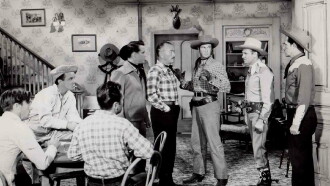
Riders of the Dusk is another of Monogram's formula Whip Wilson westerns. Since the studio couldn't build an entire film around Wilson's bullwhip prowess, a plot was called for.
A study of an amoral and sleazy defense lawyer who suddenly tries to "go straight" when he finds out that his tart wife is cheating on him; as well as the similarities he has in life with one of his clients.
Young Viscount Tony Pym wangles National Service leave on the pretext of standing as a Tory candidate for a local seat held by his family for generations.
Comments
Have you watched Whenever You Eat... yet? What did you think about it?