Murder in Paris (aka Paris Efter Midnight aka French Life) was the second of five burlesque shorts presented in anaglyphic 3-D by Oakland and San Francisco burlesque theater magnate, Harry A. Farros. Photographed in Los Angeles circa May 1953, the title was changed to Parisienne Life shortly before releases in September 1953. It's likely that while working with George Weiss at Screen Classics in the spring of 1953, Edward D. Wood Jr wrote the script for this 3-D short. While it is not listed on his resume, it was photographed on the same day as Cleopatra Follies (aka Flame of Islam) which Wood does list as a writer's credit.
Inspan is dedicated to tough pioneers, who along dangerous roads - with courage and strength - developed the vital transport routes for a young and growing country - the transport riders.
The residents of a small town are excited when a flaming meteor lands in the hills, until they discover it is the first of many transport devices from Mars bringing an army of invaders invincible to any man-made weapon, even the atomic bomb.
A sheep rancher entrusts his goofy sheepdog Dizzy to guard his herd one night. The dog is told to blow a whistle when he sees a wolf, but he spends his time fooling his master by "crying wolf," and he proceeds to blow the whistle for no reason other than to excite the farmer.
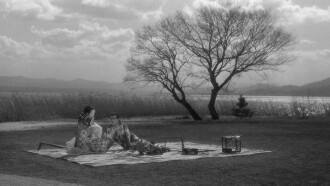
In 16th century Japan, peasants Genjuro and Tobei sell their earthenware pots to a group of soldiers in a nearby village, in defiance of a local sage's warning against seeking to profit from warfare.
"The Man from Cairo", a Michaeldavid production for distribution by Lippert, with Ray Enright the only credited director on the film print, finds Mike Canelli, the man from Cairo, nosing around Algiers with mystery surrounding the people he meets and the things he does and has done to him, all deriving from the war-time theft of $100,000,000 in gold which lies somewhere in the adjacent desert.