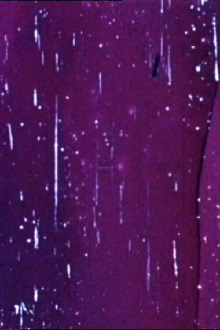
Made in 1953, Study in Optical Rhythm is an examination of the visual functions of rhythm. His best known film, it was drawn and painted directly onto the film stock at intervals of 4, 8, 12, 16 and 24 frames to find concurrence with a predetermined musical accompaniment. The film was intended to be screened both with and without music to explore differing audiovisual relationships. Technically Study in Optical Rhythm is thus reminiscent of the animations of Norman McLaren, Len Lye and Oscar Fischinger.
"The Man from Cairo", a Michaeldavid production for distribution by Lippert, with Ray Enright the only credited director on the film print, finds Mike Canelli, the man from Cairo, nosing around Algiers with mystery surrounding the people he meets and the things he does and has done to him, all deriving from the war-time theft of $100,000,000 in gold which lies somewhere in the adjacent desert.
In 16th century Japan, peasants Genjuro and Tobei sell their earthenware pots to a group of soldiers in a nearby village, in defiance of a local sage's warning against seeking to profit from warfare.
While Ludovic Dubois, a young summer camp monitor in Saint-Benoît, entertains the children by playing Robin Hood, the lord's niece is kidnapped by her uncle, in the castle next door.