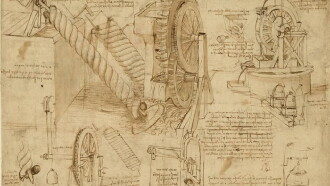
Provides a basis for appreciating the style and beauty of Leonardo da Vinci's art by examining his famous works. His versatility as an artist, mathematician, anatomist and architect is also pictured.
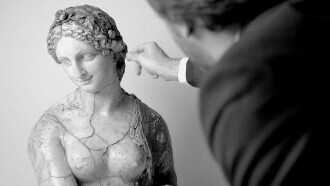
Acquired in July 1909 by art collector Wilhelm von Bode (1845-1929), director general of the Prussian Art Collections and founding director of the Kaiser-Friedrich-Museum, now the Bode-Museum, the Bust of Flora, Roman goddess of flowers, has been the subject of controversy for more than a century.
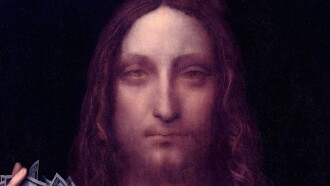
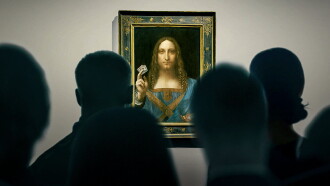
In November 15, 2017, the painting Salvator Mundi, attributed to Italian artist Leonardo da Vinci (1452-1519), was sold for an unprecedented $450 million.
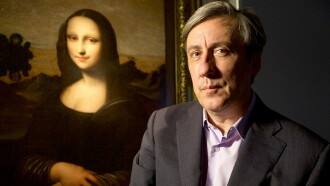
London, England, 2008. Some of the most distinguished experts on the work of Italian artist Leonardo da Vinci (1452-1519) gather at the National Gallery to examine a painting known as Salvator Mundi; an event that turns out to be the first act of one of the most fascinating stories in the history of art.
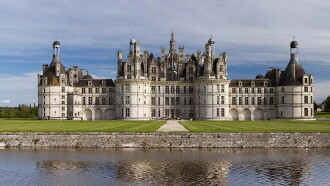
Chambord, the most impressive castle in the Loire Valley, in France, a truly Renaissance treasure, has always been an enigma to generations of historians.
Popular movie trailers from 1957
These some of the most viewed trailers for movies released in 1957:
A young street vendor who is a cockfighting aficionado, attracted by the image of one of them, settles on the ranch of its owner where he falls in love with the foreman's daughter.
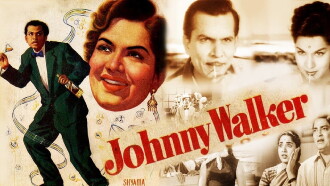
Chronicling the comedic escapades of Bombay-based alcoholic Murli Manohar as he uses a forged document to secure employment; falls in love with, Chandra Kripalani, the Manager's Secretary; then fools her into believing that he is an abstainer, and the real alcoholic is his elder brother.
George Nader plays a reporter whose career is ruined by liquor. A comeback opportunity presents itself when Nader is a bystander at the arrest of a well-known criminal.