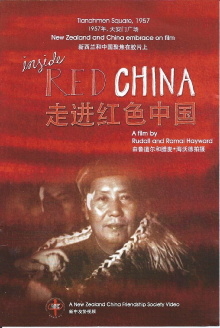
October 1st, 1957. Dusk descends on Tiananmen Square, Peking. Fireworks crackle light across the night sky, above a city alive with National Day festivities and celebrations. Two intrepid New Zealand film-makers - Rudall and Ramai Te Miha Hayward - are there, documenting the life and times of communist China. The distinction of being the first English speaking foreigners to film unfettered in communist China was significant. The invitation to visit China was facilitated through the New Zealand China Friendship Society. They filmed in Canton, Shanghai, Peking (Beijing) and Wuhan. It was a small window of opportunity for Westerners to gaze on a country that was largely a mystery to the outside world since 1949. The unfortunate irony was that two of the documentaries; “Wonders of China”, and “Inside Red China”, were considered to be communist propaganda, and were not distributed outside of New Zealand.
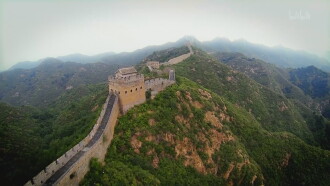
It's the most extraordinary feat of engineering in history, and one of the most iconic man-made structures on the planet - the Great Wall of China, stretching thousands of miles across barren deserts and treacherous mountains before finally plunging into the sea.
The story of the documentary The Sorrow and the Pity (1971), directed by Marcel Ophüls, which caused a scandal in a France still traumatized by the German occupation during World War II, because it shattered the myth, cultivated by the followers of President Charles de Gaulle (1890-1970), of a united France that had supposedly stood firm in the face of the ruthless invaders.
After losing his job during lockdown, Natan signs up to a microtask website. Having become a “Turker” alongside tens of thousands of others, he is paid a cent for each face he erases on Google Street View.
Clarissa Dickson Wright tracks down Britain's oldest known cookbook, The Forme of Cury. This 700-year-old scroll was written during the reign of King Richard II from recipes created by the king's master chefs.
Africa in the sixties. The Nile perch, a ravenous predator, is introduced into Lake Victoria as a scientific experiment, causing the extinction of many native species.
A cinematic essay interweaving private archive images and a mixture of reflective, speculative and poetic intertitles that, like “an old movie from the 20th century”, invites us to meditate on what Des Pallières once liked to call “our old homeland”.
Sarah Kamya is a school counselor in New York City. She began the project Little Diverse Libraries on June 3rd and has already raised over $13,000, supported black owned bookstores, and has distributed 775 books to Little Free Libraries across all 50 states.
The Lourenço mine, in northern Amapá, continues to attract people driven by the dream of gold, despite the extreme wear of bodies and souls that the activity provides.
Popular movie trailers from 1958
These some of the most viewed trailers for movies released in 1958:
Two fairies, Terencja and Felicja are in posession of the Lucky Rain Boots, which they intend to give to the most deserving person in the city of Kraków.
1958: during the Russian campaign, a military priest is called upon to assist Private Baranowski, who has been sentenced to death for desertion, on his last night.
A border-town bombing draws Mexican investigator Miguel Vargas into a corruption-ridden police investigation led by crooked captain Hank Quinlan, setting off a deadly struggle over power, justice, and truth.