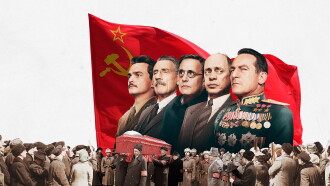
In late 1952, an aging and increasingly paranoid Stalin puts in motion a purge against his doctors, with antisemitic overtones. His lackeys, including Khrushchev, Molotov and Beria, fear it will spread to the Politburo, and plan to strike first.
In 1945, as Stalin sets his hands over Poland, famous painter Wladislaw Strzeminski refuses to compromise on his art with the doctrines of social realism.
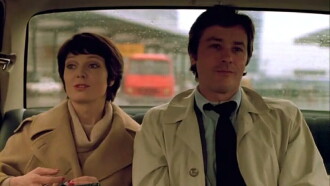
This story starts in 1980 in Paris as the memories of Andrei Borodin, a Soviet agent, take the action back to 1943 during the Teheran meetings of Stalin, Roosevelt and Churchill.
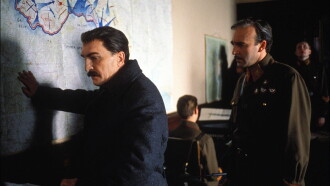
The life and career of the brutal Soviet dictator, Josef Stalin. Through the eyes and memories of Anna Aliluyeva, Stalin’s granddaughter, the film traces the rise of the Bolshevik tyrant from Lenin’s return from exile to his brutal struggle with Trotsky, the creation of his feared secret police and the merciless inner workings of his regime.
A dance troupe from the autonomous region of Abkhazia in western Georgia perform for Stalin, Lavrentiy Beria, Abkhaz leader Nestor Lakoba, and other high-ranking party officials in the Black Sea coastal town of Gagra.
Convinced that his subtenant is a spy and an enemy of the state, Ilija Čvorović falls into deep paranoia which leads to an absurd and destructive chain of events.
In the mid-1950s, an unnamed convict succsesfully manages to escape from the Goli Otok prison island, seeking shelter in a monastery on the nearby island of Rab and striking a kinship with one of the nuns in it.
A border-town bombing draws Mexican investigator Miguel Vargas into a corruption-ridden police investigation led by crooked captain Hank Quinlan, setting off a deadly struggle over power, justice, and truth.
May 1940, a mother is on the run with her two little girls. Due to a lack of gasoline she can't go far and harbours her children near a Lourdes grotto.
Armando Conforti, his family and his friends have a business: they sell souvenirs near St. Peter's, in Rome, they change dollars, in short they get along.