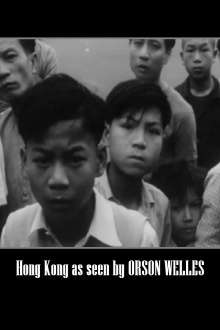
Filmed in 1960 during a break in the production of "Ferry to Hong Kong," this short documentary records Orson Welles’s three-week journey through colonial Hong Kong and Macau. The film documents the refugee crisis and extreme social inequality of the period, contrasting overcrowded rooftops, sampans, hillside settlements, and street life with the city’s visible wealth and colonial luxury. Structured as a reportage essay, the film presents a stark observational portrait of displacement, poverty, and privilege within a divided urban landscape.
Milja, living in Kristiania in the late 1800s, becomes pregnant, but the father of the child, Julius, is not around after the child has been born and Milja decides to adopt it.
Two plays by William Saroyan portraying writers stymied, inspired, frustrated, excited, listful, wistful, slothful, awed, unnerved, perhaps corrupted and perplexed by the promise and let-down writing holds for them.
Lola is a dancer in a nightclub. Many people who are looking for fun admire her, and she resists their requests to marry her or become their mistress, especially the young man who is always insisting on her.
Newly graduated defense attorney David Kyle (Vincent Ball) is stymied by his first case: to represent youthful criminal Jimmy Fuller (Brian Smith), who refuses to explain his involvement in the murder of the revered Diana White (Angela Douglas), a probation officer seemingly devoted to her work.
This drama about the Carmelite order of nuns is set during the French Revolution. A young woman seeks refuge with the Carmelites because she is terrified of dying during the upheaval.
Nirmala (Padmini) is a poor but talented young dancer who falls in love with a rich man's son Sekar (Gemini Ganesan), but he is forced to marry a rich man's daughter Prathiba (Tambaram Lalitha).
The rebellious Thracian Spartacus, born and raised a slave, is sold to Gladiator trainer Batiatus. After weeks of being trained to kill for the arena, Spartacus turns on his owners and leads the other slaves in rebellion.
Comments
Have you watched Five Columns on the Front Page: Hong Kong as seen by Orson Welles yet? What did you think about it?