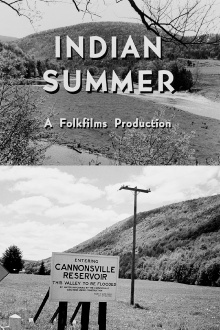
On the first hot day of summer, an old farmer goes fishing just as he has done for many years on the West Branch of the Delaware River. A young boy, his frequent fishing companion, eagerly takes him to see the first giant bulldozers, which are to begin construction on the Cannonsville Reservoir. In order to provide more water for the cities, the vast project will flood the valley. The old man goes to the general store and walks the length of the valley to talk about his concerns, but most people do not support him. The young people of the valley celebrate at a barn dance. The old man resists eviction with his unloaded flintlock. The next day, he watches as the houses and farms are burned to clear the way. His friend, the fiddler, picks him up and takes him and his few belongings away.
Thierno Souleymane Diallo sets out with his camera in search of the birth of filmmaking in Guinea. Charming and determined, he traces his country’s film heritage and history and reveals the importance of film archives.
Among the pieces featured in Fragments are the final reel of John Ford's The Village Blacksmith (1922) and a glimpse at Emil Jannings in The Way of All Flesh (1927), the only Oscar®-winning performance in a lost film.
Why are we still able, today, to view images that were captured over 125 years ago? As we enter the digital age, audiovisual heritage seems to be a sure and obvious fact.
Apostles of Cinema follows Frank, DJ Black, and Rehema — three devoted film workers in Tanzania — as they reintroduce a classic piece of the country’s film history to their audiences of working class cinephiles.
Today, the art world and beyond is obsessed with shooting analog. Whether it's a fashion house seeking to bring a new edge to their creative work, an amateur perusing eBay for the perfect vintage Polaroid, or an influencer attempting to capture a comforting retro aesthetic on social media, analog photography has piqued the interest of people everywhere.
An honest man instills in his only child the adage, 'Honesty is the best policy.' When the boy grows up, he has to fight for the truth and it remains to be seen if he can keep his ideologies alive.
Yim Tai-hung stages a diamond heist but one of his men slips away with a diamond necklace. Sustaining a fatal wound, the betrayer gives the necklace to his friend Chow Ping at Rose Apartment before he expires.
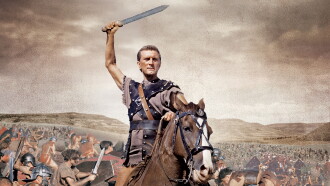
The rebellious Thracian Spartacus, born and raised a slave, is sold to Gladiator trainer Batiatus. After weeks of being trained to kill for the arena, Spartacus turns on his owners and leads the other slaves in rebellion.
In 1913 a family of traveling musicians goes to the house of a rich marquise. Lolita, daughter of one of the musicians, encounters the son of the wealthy lady.
The film tells the story of two twins separated in childhood who reunite when they are older. One of them has grown between outlaws and has become one of them, a murderous bandit who frightens the region.
Seoul, under a drizzling spring rain; Korea is under the rule of Japan. A gisaeng(Korean geisha) named Jeong-ok (Ju Jeung-nyeo) and Myeong-gyu (Lee Min), the son of a bank president, fall in love.
Little Jerguš's father was killed by gendarmes. To help his mother, the boy is hired as a laborer, then goes to the factory, to the city, but, unable to withstand the cruel exploitation, hoping to become free and independent, returns to the mountains, where his father once fought for the good of the people.
In yet another cartoon spoof of TV's "The Honeymooners", rodents Ralph Crumden and Ned Morton have stayed out too late and return home fearing their wives' wrath.
Comments
Have you watched Indian Summer yet? What did you think about it?