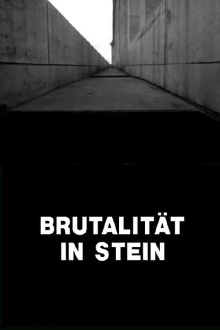
In his experimental short film "Brutalität in Stein" (Brutality in Stone), Alexander Kluge demonstrates how Nazi architecture used dimensions of inhuman and super-human scale to bolster the regime's politics of the same kind. Shots of huge neo-classical architectural structures from the Nazi period are confronted with equally anti-human national-socialist language as a voice-over.
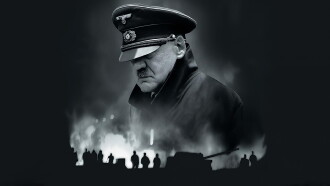
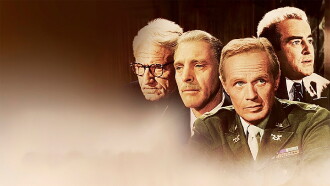
In April of 1945, Germany stands at the brink of defeat with the Russian Army closing in from the east and the Allied Expeditionary Force attacking from the west.
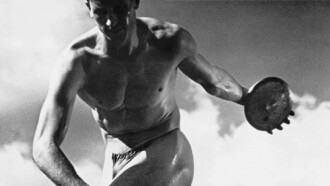
Starting with a long and lyrical overture, evoking the origins of the Olympic Games in ancient Greece, Riefenstahl covers twenty-one athletic events in the first half of this two-part love letter to the human body and spirit, culminating with the marathon, where Jesse Owens became the first track and field athlete to win four gold medals in a single Olympics.
Part two of Leni Riefenstahl's monumental examination of the 1938 Olympic Games, the cameras leave the main stadium and venture into the many halls and fields deployed for such sports as fencing, polo, cycling, and the modern pentathlon, which was won by American Glenn Morris.
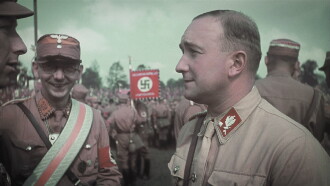
What would your family reminiscences about dad sound like if he had been an early supporter of Hitler’s, a leader of the notorious SA and the Third Reich’s minister in charge of Slovakia, including its Final Solution? Executed as a war criminal in 1947, Hanns Ludin left behind a grieving widow and six young children, the youngest of whom became a filmmaker.
A look at contemporary Paris through the lens of theories and ideologies of the past two centuries, with a particular focus on the utopian socialist ideas of Charles Fourier.
After his father is murdered by the Nazis in 1938, a young Viennese Jew named Ferry Tobler flees to Prague, where he joins forces with another expatriate and a sympathetic Czech relief worker.
Art historian and filmmaker Sundaram Tagore travels in the footsteps of Louis Kahn to discover how the famed American architect built a daringly modern and monumental parliamentary complex in war-torn Bangladesh.
After years of drifting around, Willi Palko arrives in the lignite mining area. He was not only looking for a new job, but also wanted to finally settle down here.
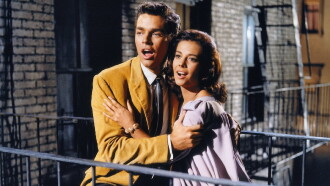
In Manhattan’s Upper West Side, rival gangs of Polish-Americans and newly arrived Puerto Ricans clash for control of the neighborhood, even as two young members from opposite sides fall dangerously in love.
Filmed at the Alhambra in Spain in just one day, according to Marie Menken. Arabesque for Kenneth Anger concentrates on visual details found in Moorish architecture and in ancient Spanish tile.