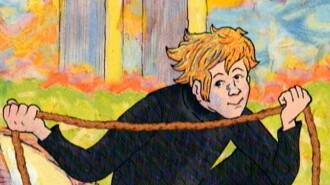
Along with graphic designer / ad-man Ryohei Yanagihara (柳原良平) and renowned book cover designer Hiroshi Manabe (真鍋博), Kuri formed the Animation Sannin no Kai (Animation Group of Three) in 1960. In doing so the three animators followed the footsteps of the 1950s Sannin no Kai composers (Yasushi Akutagawa, Ikuma Dan & Toshiro Mayuzumi) who banded together to stage performances of their avant-garde style of music. The Animation Group of Three showcased their work at three events: November 1960, December 1962, and April 1963. After 1964 this event expanded into a wider Animation Festival, that annually showcased the experimental fare of such artists as Taku Furukawa, Sadao Tsukioka, Goro Sugimoto, Keiichi Tanaami, and even Osamu Tezuka until 1971. Stamp Fantasy was introduced at the first Animation Group of Three screening on November 26, 1960 in the Sogetsu Art Center.
During a post-Christmas play date, the gang find themselves in uncharted territory when the coolest set of action figures ever turn out to be dangerously delusional.
Three friends with different cultural origins find an abandoned washing machine while playing. To their shock, they find out that the washing machine has strange powers: their heads are swapped by sticking them in the washing machine.
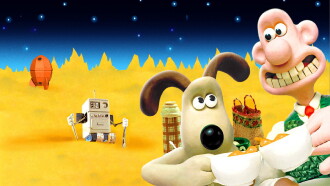
Wallace and Gromit have run out of cheese, and this provides an excellent excuse for the duo to take their holiday to the moon, where, as everyone knows, there is ample cheese.
In the middle of woods inhabited by wolves, an astrologist imagines what it would be like to be a werewolf, running and howling through the woods in a schizophrenic blur instead of sitting in his home watching videos.
An egg desperately tries to prevent being hatched. In this animated short from the Canada Vignette series, learn how societies in evolution are often in danger of self-destruction.
One of the most exciting and memorable stories in the history of the World Trade Towers is that of Philippe Petit, a French man who walked a tightrope between the massive monuments in 1974.
Popular movie trailers from 1961
These some of the most viewed trailers for movies released in 1961:
Holly Golightly is an eccentric New York City playgirl determined to marry a Brazilian millionaire. But when young writer Paul Varjak moves into her apartment building, her past threatens to get in their way.
Three soccer fans are determined to do literally anything to get to the soccer match between Czechoslovakia and the famous representation team of Brazil.
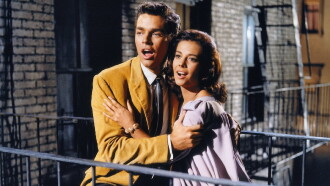
In Manhattan’s Upper West Side, rival gangs of Polish-Americans and newly arrived Puerto Ricans clash for control of the neighborhood, even as two young members from opposite sides fall dangerously in love.
Sultan and Mehmet are a newly married couple. They have dreams. They will take their friend Garip with them, move to Bozdag, buy a field, and have children.
Comments
Have you watched Stamp Fantasia yet? What did you think about it?