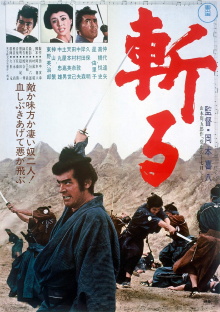
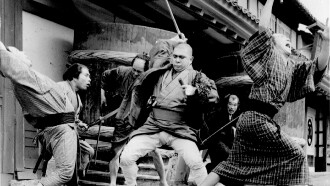
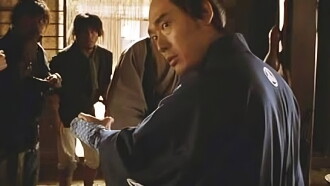
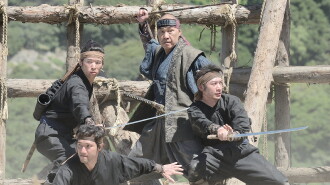
In Edo-period Japan, Shingo is born the son of an assassin who was executed for murdering her lord’s concubine. Decades later, his adoptive family is massacred for keeping the secret. Armed with an unbeatable swordfighting technique, Shingo embarks on the path of the masterless samurai in search of vengeance and a path beyond his own ignominious origins.
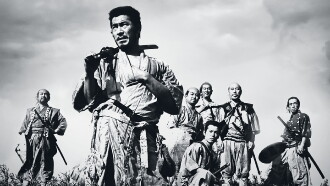
A samurai answers a village's request for protection after he falls on hard times. The town needs protection from bandits, so the samurai gathers six others to help him teach the people how to defend themselves, and the villagers provide the soldiers with food.
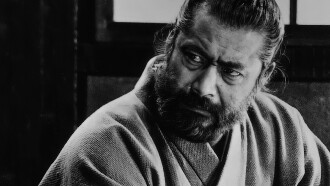
Aspiring to an easy job as personal physician to a wealthy family, Noboru Yasumoto is disappointed when his first post after medical school takes him to a small country clinic under the gruff doctor Red Beard.
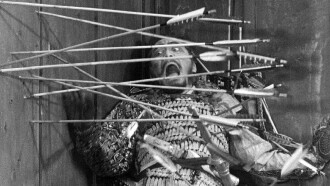
The fate of Tokugawa’s world hangs in the balance as Yagyu Jubei is sent on a mission to discover what happened to 10 of the shogun’s spies that never returned.
In this film, Hibari plays a dual role as brother and sister. The story involves a journey to Hanagasa for an incognito Lord (Kotaro Satomi) to overthrow an attempted usurpation of his domain, while being harassed by vassals of the usurper (Kensaku Hara).
From birth Hideyoshi was a restless, defiant spirit--a child of the poorest of the poor. Cast out of his peasant cottage, he would live by his wits, driven by his burning ambition to become a samurai and to find a warlord worth pledging his sword to.
The adventures of a blind, gambling masseur and master swordsman. Zatoichi targets a yakuza-controlled village, because war with a neighbouring town's smaller gang is brewing.
Sen no Rikyu (Ebizo Ichikawa) is the son of a fish shop owner. Sen no Rikyu then studies tea and eventually becomes one of the primary influences upon the Japanese tea ceremony.
Popular movie trailers from 1962
These some of the most viewed trailers for movies released in 1962:
A group of boys playing near the seashore in Tokyo find a goat, kill it in a tug of war for ownership, bury it with ceremony, and, except for one boy, run off in heedless laughter ready for more games.
A happy-go-lucky guy falls in love with his professor's daughter. Although his brother supports him, his financial situation forces him to make many sacrifices in life.
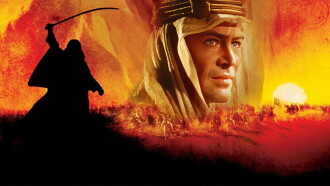
During World War I, English officer Thomas Edward 'T.E.' Lawrence sets out to unite and lead the diverse, often warring, Arab tribes to fight the Turks.
A young woman struggles with life, love and career. She is courted by a young man but is unwilling to enter into a relationship if it means limiting her freedom.