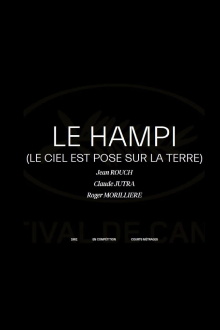
A ritual vase, the hampi, is placed in the center of the Musée de plein air de la République du Niger in Niamey, during a ritual ceremony featuring possession dances. With this film, Jean Rouch continues his ethnological and cinematographic study of Songhay ritual objects. He demonstrates that, in a particular context, the transfer of a hampi vase to a museum requires the organization of a ritual ceremony to obtain the gods' approval. At the time, however, reservations about filming a possession dance for the opening of a shrine in a museum made the move "questionable from a museological point of view".
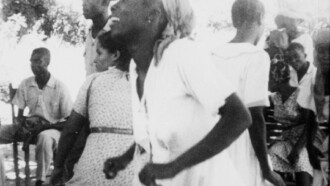
This intimate ethnographic study of Voudoun dances and rituals was shot by Maya Deren during her years in Haiti (1947-1951); she never edited the footage, so this “finished” version was made by Teiji Ito and Cherel Ito after Deren’s death.
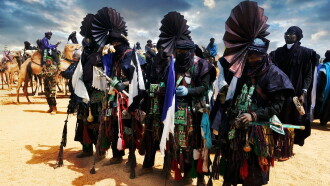
AMIN portrays Qashqai musician Amin Aghaie, a young modern nomad and his family who despite facing steep financial, cultural and political obstacles are dedicated to their art and culture.
The young goat herders from the cliff of Bandiagara practice on the stone drums of their ancestors. An ethnomusicological film experiment describing the subtle plays of the right and left hand of Dogon drummers.
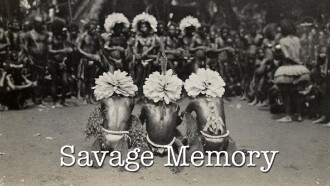
A synaesthetic portrait made between French Polynesia and Brittany, Color-blind follows the restless ghost of Gauguin in excavating the colonial legacy of a post-postcolonial present.
In Isère, in the mountainous region of Trièves, is the Tournesol farm, an experiential farm totally autonomous in energy, a veritable laboratory for renewable energies.
The story of a poor girl who leaves her starving family and sheep for a more prosperous village. Her grandfather finds her and tries to convince her to return to her home.
A unique 'direct cinema' feature length documentary (no narration or interviews) originally filmed in the Spring of 1970 and concluded during the Summer of 2017 (footage added, restored, and re-edited).
Thomas Crimmins is a new warder, or guard, in an Irish prison. He is young, naive, and idealistic, determined to serve his country by his part in meting out justice to criminals.
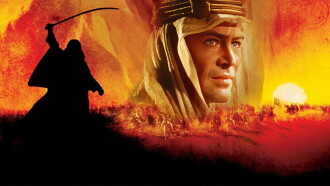
During World War I, English officer Thomas Edward 'T.E.' Lawrence sets out to unite and lead the diverse, often warring, Arab tribes to fight the Turks.
A triple love story between Mine (Nebahat Çehre), the owner of the farm in the deserted lake valley, and pilot Mazhar (Samim Meriç), whom she had to marry due to the threat of death in the air, and her childhood sweetheart, her aunt's son Ümit (Göksel Arsoy).
The advertising director of Pacific Pharmaceuticals, frustrated with the low ratings of their sponsored TV program, seeks a more sensationalist approach.
First World War. In a largely rural area of neutral Spain, two families confront one another and play a part in embarrassing situations because they don't support the same side in the war.
Comments
Have you watched Hampi yet? What did you think about it?