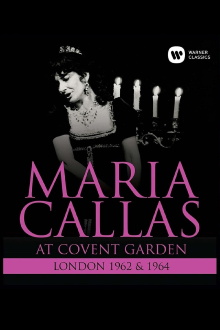
Maria Callas: At Covent Garden, 1962 and 1964 Trailer (1962)
"Opera's favorite - and most notoriously emotional - diva performs at London's famed Covent Garden opera house"04 November 1962Music70 mins
Maria Callas’ legendary live performances from the Royal Opera House, Covent Garden, from 1962 and 1964 celebrate her triumphant return to the Covent Garden stage. Repertoire from these performances include Verdi: Tu che le vanità (Don Carlo), Bizet: Habanera & Séguedille (Carmen) and Puccini: Tosca (Act II complete). Her vivid portrayals of the tragic Elisabeth de Valois, the tantalising Carmen, and her vulnerable Tosca (directed by Franco Zeffirelli) captured the hearts of the London audiences. This is Maria Callas as the world remembers her. Renato Cioni, Tito Gobbi, Robert Bowman, Dennis Wicks Orchestra & Chorus of the Royal Opera House, Covent Garden- Conducted by Georges Prêtre & Carlo Felice Cillario.
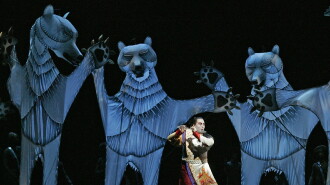
An anthology of four abbreviated operas: "William Tell" by Rossini, "The Marriage of Figaro" by Mozart, "Don Pasquale" by Donizetti, and "Carmen" by Bizet.
Simon Keenlyside smolders dangerously in the title role of Mozart’s version of the legend of Don Juan, creating a vivid portrait of a man who is a law unto himself, and all the more dangerous for his eternally seductive allure.
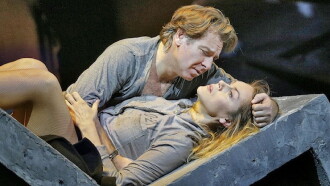
Kristine Opolais is the young woman whose conflicting desires for love and luxury lead to her tragic end, and Roberto Alagna plays the man who falls for her in Puccini’s early hit.
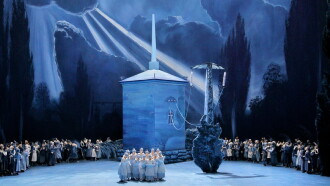
Legendary opera house, La Scala is more than just a stage— it’s a dream factory. And this year, over the course of four intensive months, 900 people will work relentlessly to incarnate Verdi’s opera masterpiece, ‘‘The Force of Destiny”.
After Tristan und Isolde (2016), Parsifal (2017) and Die Meistersinger von Nürnberg (2018) this is the fourth installment of the exclusive, multiyear partnership between Deutsche Grammophon and the Bayreuth Festival, in which the Yellow Label is the exclusive audiovisual partner of the mythical Wagner festival, releasing each edition's new production on Blu-ray.
Julie Taymor’s kaleidoscopic production returns to select cinemas this holiday season in an encore presentation of the company’s first-ever Live in HD transmission that includes tenor Matthew Polenzani, baritone Nathan Gunn, and bass René Pape in this abridged, English-language version of Mozart’s classic fable.
Brigadier General Frank D. Merrill leads the 3,000 American volunteers of his 5307th Composite Unit (Provisional), aka "Merrill's Marauders", behind Japanese lines across Burma to Myitkyina, pushing beyond their limits and fighting pitched battles at every strong-point.
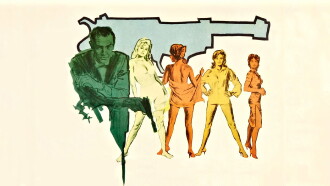
Agent 007 battles mysterious Dr. No, a scientific genius bent on destroying the U.S. space program. As the countdown to disaster begins, Bond must go to Jamaica, where he encounters beautiful Honey Ryder, to confront a megalomaniacal villain in his massive island headquarters.
A group of boys playing near the seashore in Tokyo find a goat, kill it in a tug of war for ownership, bury it with ceremony, and, except for one boy, run off in heedless laughter ready for more games.
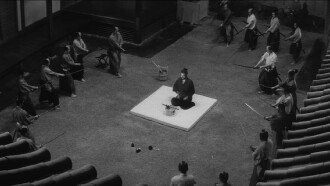
Down-on-his-luck veteran Tsugumo Hanshirō enters the courtyard of the prosperous House of Iyi. Unemployed, and with no family, he hopes to find a place to commit seppuku—and a worthy second to deliver the coup de grâce in his suicide ritual.