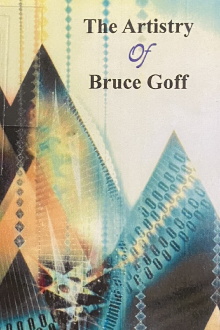
The artistry and architecture of Bruce Goff reflects his innate ability to transform simple shapes and materials into imaginative, embellished artworks that convey texture, color and depth. His architectural style is free from predetermined form and begins with a feeling that grows out of function, much like a painting develops from inspirations. This artistic video, presented by Joe D. Price, is the winner of the 1962 Cannes Film Festival President's Award, Non-Theatrical Division.
The Spirit in Architecture examines the work of John Lautner, one of the most visionary and profound architects, who began his career in Los Angeles in the 1930's.
On the occasion of the fourty years anniversary of François Mitterand's election, a look back to the relationship between the President and artists, from admiration to manipulation.
A look at contemporary Paris through the lens of theories and ideologies of the past two centuries, with a particular focus on the utopian socialist ideas of Charles Fourier.
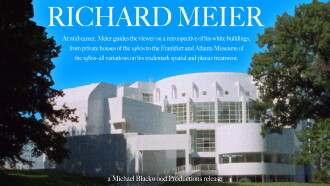
Meier guides the viewer on a retrospective of his white buildings, from private houses of the 1960s to the Frankfurt and Atlanta Museums of the 1980s--all variations on his trademark spatial and planar treatment.
With its own demolition imminent, a building reflects back upon its life, projects its own ideas of what might have been and imagines future possibilities.
Known for his bold, abstract and stark white buildings, American architect Richard Meier now takes on the challenge of building the Jubilee Church in Rome.
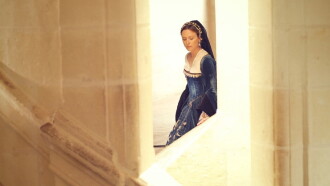
Chambord, the most impressive castle in the Loire Valley, in France, a truly Renaissance treasure, has always been an enigma to generations of historians.
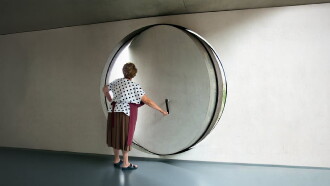
Koolhaas Houselife portrays one of the masterpieces of contemporary architecture. The film lets the viewer enter into the house's daily intimacy through the stories and daily chores of Guadalupe Acedo, the housekeeper, and the other people who look after the building.
Popular movie trailers from 1962
These some of the most viewed trailers for movies released in 1962:
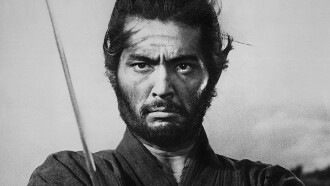
Down-on-his-luck veteran Tsugumo Hanshirō enters the courtyard of the prosperous House of Iyi. Unemployed, and with no family, he hopes to find a place to commit seppuku—and a worthy second to deliver the coup de grâce in his suicide ritual.
A happy-go-lucky guy falls in love with his professor's daughter. Although his brother supports him, his financial situation forces him to make many sacrifices in life.
In 1911, Arnolphe Combalette left his corner of Provence to seek his fortune in the Americas. Fifty years later, a letter from him arrived in the village: "No, I'm not dead yet, but it won't be long now.
The first variety show produced by AB Svenska Ord. It was the first of the three "Dog-revues", the second being "Gula Hund" and the third one "Svea hund".
In his film attempt, Berlin cabaret artist Wolfgang Neuss strings together various sketches to create a story that deals with the division of Germany based on motifs from the Münchhausen legend.