Camera movement and film editing are combined to animate the ceramic figurines of John Perceval. He created his angels "more or less as symbols of the world's survival." An intangible element common to all Perceval's angels is their spirit of humanity. These ceramic sculptures are disting- uished by their beautiful modelling, and their lustrous red copper glaze with its uncanny depth and beauty. Perceval does not devote himself exclusively to ceramic sculpture; he gives equal time to painting and has won the McCaughey and Vizard-Whollohan Prizes, and shared the Wynne Prize in 1961. Photography by Gerard Vanderberg; music by Dorian Le Gallienne.
Olivier, a handsome but callow and moody young student, picks up an enthusiastic actress during a theatre rehearsal, and is introduced to her acquaintances -- a group of jaded rich kids who spend their time storming around the Riviera harassing passersby, throwing wild parties and following all the latest trends.
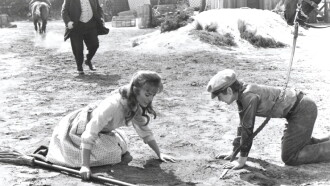
A young boy discovers the existence of a group called the Mooncussers - a gang of pirates that work at night and sends out false homing signals to ships at sea.
Raja, the son of a rich man who was cheated of his wealth by Jambu, grows up in an orphanage. He becomes a famous poet in the city with the help of Jambu's family, unaware of his past.
A group of boys playing near the seashore in Tokyo find a goat, kill it in a tug of war for ownership, bury it with ceremony, and, except for one boy, run off in heedless laughter ready for more games.
The first variety show produced by AB Svenska Ord. It was the first of the three "Dog-revues", the second being "Gula Hund" and the third one "Svea hund".
Comments
Have you watched The Dance of the Angels: Ceramic Sculptures of John Perceval yet? What did you think about it?