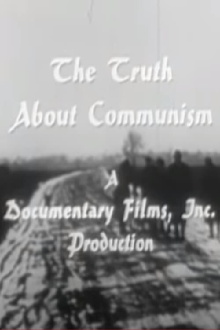
Ronald Reagan hosts and narrates this documentary about the Communist threat to the free world. Alexander Kerensky, the first premier of the provisional Russian Government in 1917, formally introduces the film. This documentary traces the development of the Communist movement from birth, the Lenin years, its struggle for direction, the Stalin years (featuring a response by Leon Trotsky attacking the Stalin purges) and the ascendancy of Nikita Krushchev.
A disturbing collection of 1940s and 1950s United States government-issued propaganda films designed to reassure Americans that the atomic bomb was not a threat to their safety.
A research-based essay film, but also a very personal perspective on the history of socialist Yugoslavia, its dramatic end, and its recent transformation into a few democratic nation states.
Taking stock of the extraordinary adventure of "Pif Gadget", a French publishing phenomenon of the 1970s-80s and even of the whole history of children's press.
"A Home On The Range" tells the little-known story of Jews who fled the pogroms and hardships of Eastern Europe and traveled to California to become chicken ranchers.
An account of the childhood and youth of the Peruvian writer Mario Vargas Llosa, Nobel Prize for Literature in 2010, and how the hard experiences he lived during these formative years led him to write and publish his first major work when he was only 26 years old.
Raja, the son of a rich man who was cheated of his wealth by Jambu, grows up in an orphanage. He becomes a famous poet in the city with the help of Jambu's family, unaware of his past.
The epic tale of the development of the American West from the 1830s through the Civil War to the end of the century, as seen through the eyes of one pioneer family.
Five short stories.
(1) “Czas przybliża, czas oddala” – Edward recalls his unfulfilled love for Anna and, years later, writes to her sister Zofia, mistaking her for Anna.