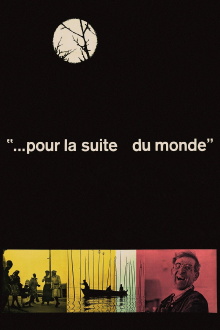
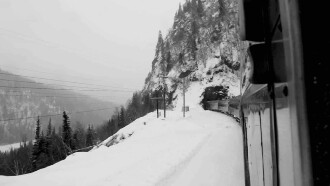
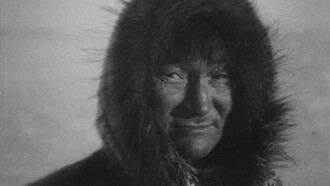
At the instigation of the filmmakers, the young men of the Ile-aux-Coudres in the middle of the St-Lawrence River try as a memorial to their ancestors to revive the fishing of the belugas interrupted in 1924.
On the eve of the publication of a biography of Claude Jutra, one of the most famous and celebrated filmmakers in Quebec and Canada, a leak leaked to the press reveals that the book contains anonymous allegations of pedophile acts committed by the filmmaker.
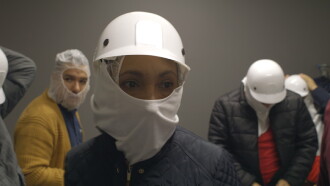
A cinematic and introspective look at the residents of a Quebec town—once the site of the world's largest asbestos mine—as they grapple with their community's industrial past.
Quebec, on the cusp of the 1960s. The province is on the brink of momentous change. Deftly selecting clips from nearly 200 films from the National Film Board of Canada archives, director Luc Bourdon reinterprets the historical record, offering us a new and distinctive perspective on the Quiet Revolution.
Co-directors Hubert Caron-Guay and Serge-Olivier Rondeau follow migrant workers through the steps in the hiring process of a community-based employment assistance organization.
A story of two old friends, who after ten years - one as the deputy director and the other as the chairman of the party organization - meet on a large construction site.
A dance performance salute to choreographer-dancer Lester Horton with Alvin Ailey, Carmen de Lavallade and James Truitte, all former members of his company.
João Eduardo, a young inexperienced doctor, takes up work in a village. The initial skepticism from the community gives place to esteem for the new physician after some well succeeded cases.
A Wild West cow town is starving for entertainment and it falls upon Calamity Jane, a rowdy, gun-toting tomboy, to go to Chicago to bring back a famed stage actress.
Cesar Borgia--a cardinal in the Catholic church, a confidant of the Pope and a member of one of the wealthiest and most powerful families in 16th-century Italy--must deal with a host of political and personal crises.