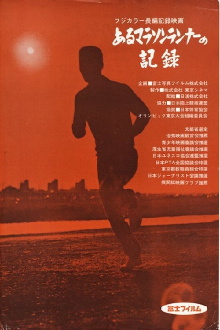
This was a sponsored documentary film by director Kazuo Kuroki of Japan. This highly artistic film focused entirely on Japanese marathon runner Kenji Kimihara. Kimihara finished eighth in the 1964 Olympic marathon with a time of 2:19:49. He had previously won the Japanese trials in 2:17:11 on April 12th of that year. He competed in a total of three Olympic marathons in all (finishing 2nd in 1968, and 5th in 1972) and he won 9 of 18 marathons prior to the Mexico City Games, including the Boston Marathon in 1966. Kimihara’s personal best was 2:13:25.
As Garibaldi's troops begin the unification of Italy in the 1860s, an aristocratic Sicilian family grudgingly adapts to the sweeping social changes undermining their way of life.
The trademark of The Phantom, a renowned jewel thief, is a glove left at the scene of the crime. Inspector Clouseau, an expert on The Phantom's exploits, feels sure that he knows where The Phantom will strike next and leaves Paris for the Tyrolean Alps, where the famous Lugashi jewel 'The Pink Panther' is going to be.
João Eduardo, a young inexperienced doctor, takes up work in a village. The initial skepticism from the community gives place to esteem for the new physician after some well succeeded cases.
Pioneering comedy legend Max Linder wrote, produced, directed and starred in Seven Years Bad Luck. Hilarious misadventures begin when Max' butler, chasing a maid, breaks an expensive full-length mirror.
If a girl has such an uninteresting occupation that she sells flowers, she likes to indulge in daydreaming, where she can experience unsuspected adventures.
A candid, inside look at one of the greatest ballplayers ever, up through the 1963 season. Many highlights from Willie Mays's career are shown, including his 4-homer night against the Braves, his 400th homer against the Cardinals, and his 2000th hit.