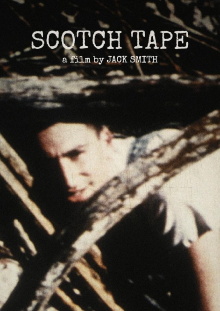
Shot in 1959, Scotch Tape is Jack Smith's first film -- a joyous, three-minute romp, in color, using Peter Duchin's rhumba "Carinhoso" for its soundtrack. Three young men merrily bop through the wreckage of razed buildings at the site of what would become Lincoln Center. Apparently, Scotch Tape was never edited and, instead, was cut in the camera by Smith, combining long shots and close-ups while filming mostly from overhead. The title comes from a small strip of scotch tape that was accidentally stuck on the camera and so is visible in the lower-right corner of the frame throughout the film.
In an era marked by the reign of fluid relationships, through apps and blind dates, Alejo seeks to fill his sentimental void by constantly changing sex partners.
Twenty-year-old Anaïs works with her father on a farm that is struggling to keep operating. When their fertilizer distribution machine, borrowed from the farming cooperative, is stolen, Anaïs reacts, and fights in order to continue working, and to keep her father, on the brink of giving up and selling their farm, afloat.
A Wild West cow town is starving for entertainment and it falls upon Calamity Jane, a rowdy, gun-toting tomboy, to go to Chicago to bring back a famed stage actress.
If a girl has such an uninteresting occupation that she sells flowers, she likes to indulge in daydreaming, where she can experience unsuspected adventures.
A compilation of seven shorts made for the National Film Board of Canada. Features the NFBC shorts, "Nahanni," "Le Merle," "A Chairy Tale," "The Cars in Your Life," "Corral," "Wrestling," and "Neighbors.
Cesar Borgia--a cardinal in the Catholic church, a confidant of the Pope and a member of one of the wealthiest and most powerful families in 16th-century Italy--must deal with a host of political and personal crises.
A candid, inside look at one of the greatest ballplayers ever, up through the 1963 season. Many highlights from Willie Mays's career are shown, including his 4-homer night against the Braves, his 400th homer against the Cardinals, and his 2000th hit.
A dance performance salute to choreographer-dancer Lester Horton with Alvin Ailey, Carmen de Lavallade and James Truitte, all former members of his company.