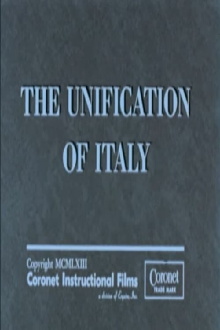
Traces the struggle to unify Italy from Napoleon's invasion in 1805 to the Plebiscite of Rome in 1870. Uses authentic costumes against historic locales.
Against the background of flocks of sheep at pasture, mules walking down unpaved roads, tractors in the fields, and isolated figures in a deserted village, a caption explains that Barbagia is a vast region in Sardinia; Orgosolo, Oliena and Mamoiada are villages of shepherds and the men spend most of the year far away, with their flocks.
After the World War I, Mussolini's perspective on life is severely altered; once a willful socialist reformer, now obsessed with the idea of power, he founds the National Fascist Party in 1921 and assumes political power in 1922, becoming the Duce, dictator of Italy.
Eighteen year old Irma Testa is Italy’s first female boxer to make it to the Olympics. It’s a remarkable outcome for a girl raised in one of the poorest, most crime-ridden neighborhoods of Naples.
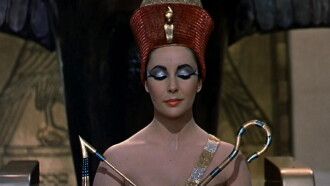
Determined to hold on to the throne, Cleopatra seduces the Roman emperor Julius Caesar. When Caesar is murdered, she redirects her attentions to his general, Marc Antony, who vows to take power—but Caesar’s successor has other plans.
The Nazis, exasperated at the number of escapes from their prison camps by a relatively small number of Allied prisoners, relocate them to a high-security 'escape-proof' camp to sit out the remainder of the war.
Comments
Have you watched The Unification of Italy yet? What did you think about it?