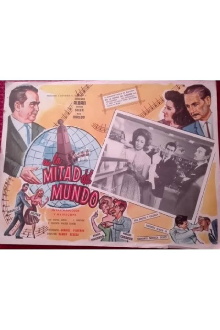
Mexican-Ecuadorian film from 1964, originally titled: ‘The Misadventures of Don Ventura’. A musical comedy created in the style of traditional classic Hollywood cinema of the 1950s, with the purpose of promoting Ecuador to the world through an idyllic vision of the country that erased economic, political and social conflicts, while offering its national and international viewers the idea of a harmonious nation in the process of modernization.
While fighting in Britain, Roman forces commanded by Caligula capture the noble warrior, Glaucus. Seeing in him gladiator material, Caligula takes Glaucus back to Rome along with other hostages including Glaucus's girlfriend, Ena.
Prospective hotel owner Carlos is having problems with the completion of his hotel on the Adriatic. He quickly asks his niece Vivi in Germany to cancel the bookings he has made so far.
Once upon a time there lived in the same village two men bearing the very same name. One of them chanced to possess four horses, the other had only one horse, so, by way of distinguishing them from each other, the proprietor of four horses was called "Great Claus," and he who owned but one horse was known as "Little Claus".
Five swindle stories, taking place in five international cities: Tokyo, Japan ("Fumiko's Five Benefactors" by Hiromichi Horikawa); Amsterdam, The Netherlands ("A River of Diamonds" by Roman Polanski); Naples, Italy ("The Road Map" by Ugo Gregoretti); Paris, France ("The Man Who Sold the Eiffel Tower" by Claude Chabrol); and Marrakesh, Morocco ("The Confidence Man" by Jean-Luc Godard).
Ameria is shocked when she finds out her husband is cheating on her, so she decides to commit suicide, but the taxi driver saves her and takes her with him.
A TV adaptation of the classic Alexandre Dumas novel. Edmond Dantes is falsely accused by those jealous of his good fortune, and is sentenced to spend the rest of his life in the notorious island prison, Chateau d'If.