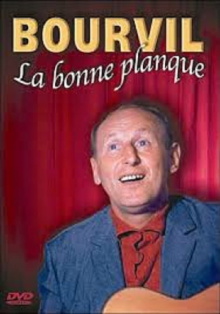
Émile and Fredo are two crooks who have just committed an armed robbery in a Paris bank. To escape the police, Émile, accompanied by his friend Lulu, takes refuge in the apartment of Antoine Perrin, a peaceful civil servant at the Ministry of Agriculture and amateur musician with the group Les Joyeux Colibris. Lulu offers to seduce him in order to prevent him from getting hit on the coffee pot.
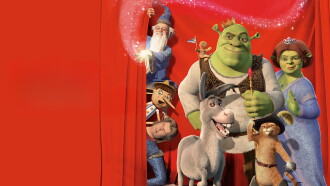
After the King of Far Far Away dies, Shrek and Fiona are to succede. However, Shrek wants to return to his cozy swamp and live in peace and quiet, so when he finds out there is another heir to the throne, he and Donkey set off to bring him back to rule the kingdom.
After World War II, the orderly life of a deputy secretary of state for family affairs, who had succeeded in closing brothels and increasing penalties for abortion offenses, is turned upside down when he learns on the same day that his wife is expecting a child and that his son has impregnated his secretary! This is only the beginning of a series of unexpected events that will shake up the foundations of this bourgeois family.
A comedy about friendship that has many surprises in store for us! How can we find the perfect friend? By connecting to Amitic, the friendly version of Meetic.
Embark on this surprising true story, that of Charles Gentès, a post-war singer nicknamed THE GOLDEN VOICE: original songs from the era, covers of the great French songs (Aznavour, Brel, Piaf, Trenet, Brassens, Montand, as well as Dario Moreno and Dalida), passionate love affairs, and experience this crazy and tender family saga that will unfold before your eyes and take you from Egypt to Lebanon via the cabarets of Montmartre.
Based on the multi-award winning film, "The Monster of Phantom Lake: The Musical!" follows guitar-wielding, a-rockin' scientist Professor Jackson, his smitten graduate student and five swell teenagers as they discover the terrifying effects of "Atomic Waste" in the form of a horribly mutated shell-shocked-World-War-II-soldier/lake algae monster!
Jenő Rejtő's works have one purpose, entertainment. One laughs to tears during a cabaret scene. In this show, the best comedians present his writings, Ila Schütz, István Mikó, László Tóth Tahi bring Rejtő's heroes to life.
A four-time widow discusses her four marriages, in which all of her husbands became incredibly rich and died prematurely because of their drive to be rich.
Traveling lawman comes to town and schools the residents in collective farming practices. There's also a bad guy with a lot of money who's cut off the water supply to the area's farmers, and the soul of a murder victim that manifests as a flying fireball.
In this romantic drama, a plain, lonely secretary wins three dance lessons. Her handsome instructor tells her that she is quite talented and cons her into signing a long-term contract.
A womanizing reporter for a sleazy tabloid magazine impersonates his hen-pecked neighbor in order to get an expose on renowned psychologist Helen Gurley Brown.
Comments
Have you watched La Bonne Planque yet? What did you think about it?