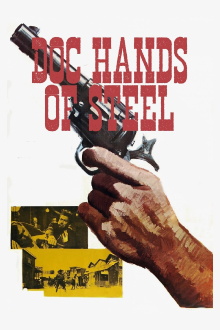
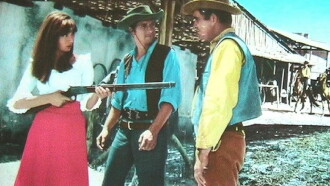
Doc McGregor, former surgeon become player, is wrongly accused of murder and pursued by Slade, a bounty hunter. In his escape he finds Larry Kitchener's corpse and decides to impersonate him. But his problems get worse as Kitchener was a famous gunslinger hired as sheriff for the people from Baldosas to stop Reyes, a Mexican bandit who has terrorized them.
Doc Saxon and his gang rob the Crown City bank but are double-crossed by Carrasco, a Mexican bandit, who steals the gold and leaves Doc and Donovan with nothing.
The story of a young peaceful ranch hand who falls for the boss’ daughter. The couple’s romance is kept secret because the beautiful woman is desired and promised to a rich opponent.
During a cattle drive, Don McGow leaves the herd in charge of his younger brother and rides off. When the herd is reported stolen he blames himself and goes in search of the thieves.
Dakota Joe is a hired gunman. For that reason he arrives at a border ranch in Mexico hired by the landowner Don Carlos, to eliminate the village doctor, a good man who helps the poor.
This sequel to the popular spaghetti western "Clint the Stranger" was released four years after the success of the first film and essentially uses the same plot.
Two men, an aging Native American and a ne'er-do-well trapper from North America, race to claim the stallion Eagle's Wing in antebellum Mexico, meeting marauded stagecoach travelers and garrisoned Mexicans along the way.
A group of ruthless convicts is led to prison through an inhospitable mountain range by a small cavalry detachment commanded by Sergeant Brown, who is accompanied by his young and beautiful daughter.
"A comic promotional mock documentary about a boy and his uncle who visit the Silverstone Racetrack during filming of the James Bond movie Thunderball (1965).
Tin Tan sets off for adventure on the isle of Puerto Rico. This musical comedy takes place in the International Airport of Puerto Rico during a day of carnival.
Post-adolescent romance; the dude and the chick both tried to impress each other by pretending to come from rich families, and eventually they'll both have to fess up.
Aspiring to an easy job as personal physician to a wealthy family, Noboru Yasumoto is disappointed when his first post after medical school takes him to a small country clinic under the gruff doctor Red Beard.
Comments
Have you watched Doc, Hands of Steel yet? What did you think about it?