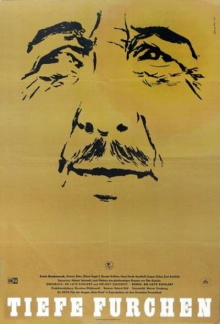
Germany in May 1945: the war is over, men are returning home and a new life begins in the villages. After 12 years in a concentration camp, the "Red Shoemaker" also returns to his home village. His wife is dead and others live in his house: Gebhardt, an employee on the farm of the large farmer Winter, and his family. The "Red Shoemaker" comes to stay with Hübner and his daughter Agnes. Over the past terrible years, he had repeatedly felt the hatred within him and wanted to take revenge on those who had sent him to the concentration camp. But now he wants to look to the future and takes on the position of mayor here in the village. He works to ensure that the village is supplied with food and tries to ensure that the fascist ideology disappears from people's minds. In doing so, he also makes enemies.
Intercutting dramatic vignettes with newsreel footage, the story follows the characters from an infantry squad as they make their way from Sicily to Germany during the end of World War II.
In postwar Germany, a displaced Czech boy, separated from his family during wartime, is befriended by an American GI while the boy's mother desperately searches for him.
Sunny is the singer of a band trying to establish itself in the East Berlin music scene. They play regular gigs in small towns, but Sunny feels out of touch with the audience and with her life as a whole.
Germany in the autumn of 1957: Lola, a seductive cabaret singer-prostitute exults in her power as a temptress of men, but she wants out—she wants money, property, and love.
Popular movie trailers from 1965
These some of the most viewed trailers for movies released in 1965:
The BBC's 1965 adaptation of E.M. Forster's novel, screened as part of their Play of the Month strand, adapted by Santha Ramu Rau and John Maynard, and directed by Waris Hussein.
A group of women are workmates at a laundry. Rike is spreading a rumor about the manager Marta, a rumor that Marta is a lesbian and that she once tried to seduce Rike.
The life of a Russian physician and poet who, although married to another, falls in love with a political activist's wife and experiences hardship during World War I and then the October Revolution.
In this crime-thriller, Rome proves to be an unhappy destination for an American couple when the husband is kidnapped and his wife begins a desperate search for him.
"A comic promotional mock documentary about a boy and his uncle who visit the Silverstone Racetrack during filming of the James Bond movie Thunderball (1965).
CBS bit on Piero Heliczer shooting his film 'Venus in Furs' (they mistakenly call it 'Dirt'). Released by Boo-Hooray as part of their exhibit on Heliczer and The Dead Language Press.
Comments
Have you watched Tiefe Furchen yet? What did you think about it?