According to Bernard Cohn's review, the directors "show that the painter of British society at the beginning of the 18th century was not only ahead of his time in his aesthetic theories, but that he carried within him the signs that allow us to recognize a creator." (Positif, no. 70, June 1965, p. 73.)
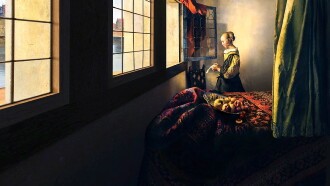
A soldier and member of the Dutch resistance investigates stolen art in the wake of the Second World War, including a Vermeer sold to the Nazis by a flamboyant forger.
Two hapless drifters, Frank and Bruno, team up with Linde to recover her land and trek across 1870's Southern Arizona to find an elusive frontier musician.
Le déjeuner sur l’herbe is simultaneously perceived from four different camera positions in a work which engages with the pro-filmic in order to question documentation, illusion and the film viewing process.
Tim Jenison, a Texas based inventor, attempts to solve one of the greatest mysteries in all art: How did Dutch Master Johannes Vermeer manage to paint so photo-realistically 150 years before the invention of photography? Spanning a decade, Jenison's adventure takes him to Holland, on a pilgrimage to the North coast of Yorkshire to meet artista David Hockney, and eventually even to Buckingham Palace.
A story about two gunfighters, Duke and Steve. Steve is in love with Duke's daughter but Duke disapproves of the match, envisioning a life of hardship and danger for the girl if she marries Steve.
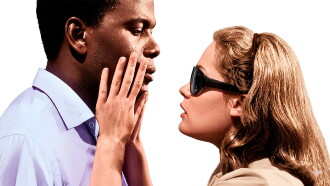
In this crime-thriller, Rome proves to be an unhappy destination for an American couple when the husband is kidnapped and his wife begins a desperate search for him.
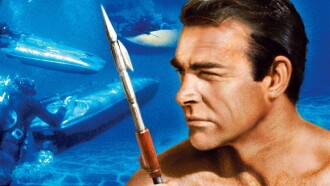
A criminal organization has obtained two nuclear bombs and are asking for a 100 million pound ransom in the form of diamonds in seven days or they will use the weapons.
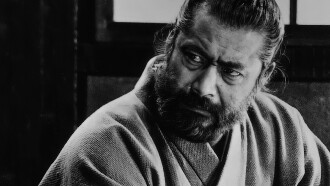
Aspiring to an easy job as personal physician to a wealthy family, Noboru Yasumoto is disappointed when his first post after medical school takes him to a small country clinic under the gruff doctor Red Beard.