Homeo is a mental construction made from visual reality, just as music is made from auditive reality. I put in this film no personal intentions. All my intentions are personal. I’ve made this film thinking of what the audience would have liked to see, not something specific that I wanted to say: what the film depicts is above all reality, not fiction. Homeo is, for me, the search for an autonomous cinematographic language, which doesn't owe anything to traditional narrative, or maybe everything. Cinema is, above all, part of a way of life which will become more and more self-assured in the years and century to come. We are part of this change, and that’s why I tried in Homeo to establish a series of perpetual changes, in constant evolution or regress, which tries, above all, to focus on things.
A black-and-white visual meditation of wilderness and the elements. Wildlife filmmaker Richard Sidey returns to the triptych format for a cinematic experience like no other.
Guy Ben-Ner, one of Israel's foremost video artists, gained international recognition with a series of low-tech films, starring his family in absurdist settings carved out of their intimate spaces and their everyday surroundings.
On Inauguration Day 2017, the filmmaker spent all day in a Washington, DC, used bookstore, where he bought a stack of audiotape secret telephone recordings of marital infidelity from 1969.
When petty criminal Luke Jackson is sentenced to two years in a Florida prison farm, he doesn't play by the rules of either the sadistic warden or the yard's resident heavy, Dragline, who ends up admiring the new guy's unbreakable will.
The Fiend with the Electronic Brain was a re-release of Al Adamson's Psycho A Go-Go featuring new footage starring John Carradine that re-imagined the original film's story with a sci-fi plot.
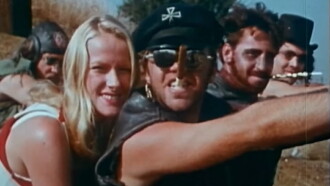
A wild, freewheeling spoof on motorcycle gangs in which tough-looking cyclists, who roam the highways on invisible bikes leaving visible tire tracks, pick up a girl hitchhiker encounter another gang.