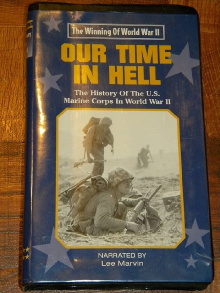
An hour long documentary on the war in the Pacific. Using Marine Corps color footage, the only footage of its kind, it traces the major battles, including Saipan, hew Jima and more narrated by Marine Corps veteran Lee Marvin.
Assigned to oversee the development of the atomic bomb, Gen. Leslie Groves is a stern military man determined to have the project go according to plan.
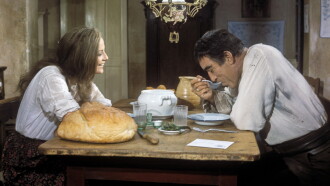
Middle-class housewife Kay Miniver deals with petty problems. She and her husband Clem watch her Oxford-educated son Vin court Carol Beldon, the charming granddaughter of the local nobility as represented by Lady Beldon.
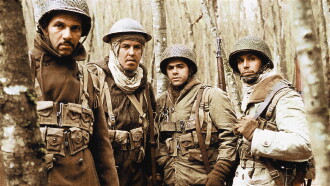
1943. They have never stepped foot on French soil but because France was at war, Said, Abdelkader, Messaoud and Yassir enlist in the French Army, along with 130,000 other “indigenous” soldiers, to liberate the “fatherland” from the Nazi enemy.
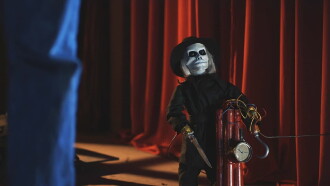
Following the murder of Andre Toulon by Nazi assassins during the height of World War II, a young Danny Coogan finds his crate of mysterious puppets, and discovers their plan to attack a secret American manufacturing plant.
A jewel thief crosses paths with a woman carrying a briefcase that the Americans, the Russians and the Chinese all want desperately, so he goes on the run with her figuring that what's inside the case has to be way more valuable than anything he could steal on his own.
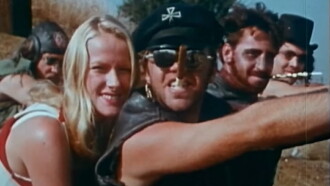
A wild, freewheeling spoof on motorcycle gangs in which tough-looking cyclists, who roam the highways on invisible bikes leaving visible tire tracks, pick up a girl hitchhiker encounter another gang.
Comments
Have you watched Our Time In Hell yet? What did you think about it?