Elie Wiesel, a survivor from Sighet, a town from which a thousand Jews were deported to the ovens of Auschwitz, returns, unknown and unseen, a silent witness to the town where he was born and grew up.
On the left of the screen, a small group of men lift the top off of what appears to be a turbine with a crane and continue to check the machine, tightening various parts with wrenches.
This short is one of Paramount's "Popular Science" series (number L6-5, or the fifth one of the 1946-47 production season) and begins by showing moon rockets, weighing 30 tons, a flight in the ionosphere, with mounted color cameras recording pictures hundreds of miles above the earth.
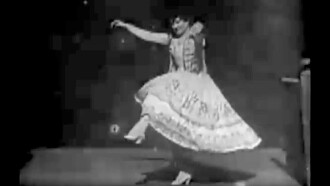
The first woman to appear in front of an Edison motion picture camera and possibly the first woman to appear in a motion picture within the United States.
From the unique vantage point of 200 miles above Earth's surface, we see how natural forces - volcanoes, earthquakes and hurricanes - affect our world, and how a powerful new force - humankind - has begun to alter the face of the planet.
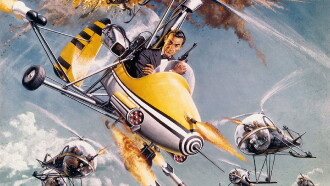
Popular movie trailers from 1967
These some of the most viewed trailers for movies released in 1967:
Property company chairman Hu Zian was attracted to his secretary Sun Yuxia's beauty and competence. One day after dinner when Hu was escorting Sun home, he received from a child on the street a box containing a mirror and two silver coins engraved with dragons.
"Desire Caught by the Tail" - Described as surrealistic, absurd, and weird. The narrative is nonlinear and the meaning nearly impossible to decipher, the work has been praised despite, and sometimes for, its lack of message.