Sons and Daughters Trailer (1967)
01 January 1967
Factual 98 mins
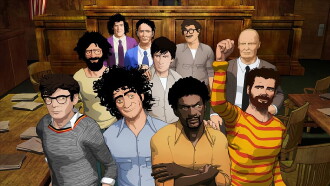
The Vietnam War protest movement from the student point of view is the basis for this documentary shot in the San Francisco Bay area and dealing mainly with a protest march from the University of California to the Oakland Army Terminal in 1966.
Watch the official Sons and Daughters 1967 trailer in HD below or find more Sons and Daughters videos on Vidimovie .
Watch Full Movies Online
Watch Movies Now
Sorry, we can't find the movie trailer you're looking for.
Either a trailer for this movie has not been released yet, or it
was removed following a request from the copyright holder.
Find more trailers
International Titles
Сыновья и дочери Америки Trailer
International Releases Dates
United States
01 January 1967
Similar Trailers
If you liked the Sons and Daughters trailer, you may like these ones:
15 October 1973
Mondo-style docudrama about a war correspondent who comes back home and has a spiritual crisis about his own mortality.
23 April 1990
A documentary about militant student political activity at the University of California, Berkeley in the 1960s.
27 January 1972
For three days in 1971, former US soldiers who were in Vietnam testify in Detroit about their war experiences.
01 April 2005
Pioneering the harsh landscape of Nebraska was difficult enough in 1869. Pioneering a new university was almost beyond reason.
29 February 2008
Archival footage, animation and music are used to look back at the eight anti-war protesters who were put on trial following the 1968 Democratic National Convention.
12 January 2024
Skip Liberty enlisted in the Army in 1968. During his tour in Vietnam he shot 3,100 feet of Super 8 film, over 3 hours worth.
17 November 2002
The remarkable story of The Weather Underground, radical activists of the 1970s, and of radical politics at its best and most disastrous.
30 September 2025
On May 8, 1970, construction workers violently clashed with students demonstrating against the Vietnam War in lower Manhattan.
03 March 2018
Using obscure archival footage, animated illustrations and interviews, this film tells the story of the Vietnam War from the perspective of five Vietcong veterans: a soldier, an officer, an informant, a guerilla, a My Lai survivor, and the leader of the Long Hair army.
15 July 1932
The film is about a protest provoked when the university decided to restrict access to sports facilities to athletes, cutting out all other students.
01 January 1984
An short anti-cruise missile film created in collaboration with a group of filmmakers.
Popular movie trailers from 1967
These some of the most viewed trailers for movies released in 1967:
01 December 1967
The Fiend with the Electronic Brain was a re-release of Al Adamson's Psycho A Go-Go featuring new footage starring John Carradine that re-imagined the original film's story with a sci-fi plot.
28 July 1967
Secret Agent Francis Coplan, is given the task of finding priceless artwork stolen by the Nazis' in 1943.
12 August 1967
Saburo Kitajima, one of Japan’s most famous Enka singers, returns in the fifth of the Kyodai Jingi series.
13 June 1967
A mysterious spacecraft captures Russian and American space capsules and brings the two superpowers to the brink of war.
01 February 1967
Deals with revolution in Québec, shown through satire and involving an invasion by neighboring Labradorians.
01 January 1967
Asha lives a wealthy lifestyle in Bombay with her widowed dad, who would like her to get married to Dr.
23 December 1967
A moral story about two people who have completely different attitudes to life and people. The duel of the heroes ends tragically.
Comments
Have you watched Sons and Daughters yet? What did you think about it?
Artwork, screen shots, trailers and other imagery is © 1967 American Documentary Films Inc..