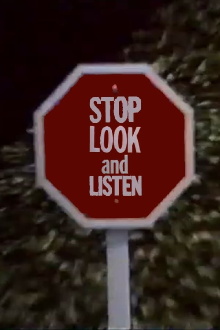
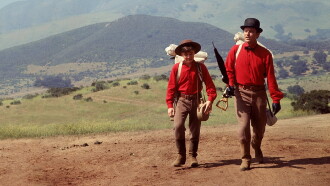
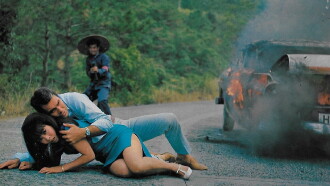
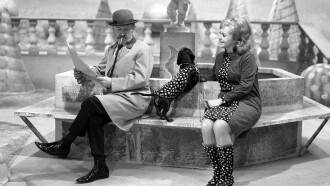
Stop Look and Listen is a 1967 sort comedy film written, directed by and starring Len Janson and Chuck Menville. It was mostly filmed in Griffith Park in pixilation [stop-motion photography].The film generates comedy by contrasting the safe and dangerous styles of two drivers who drive in the way made famous by Harold Lloyd: by sitting in the street and seeming to move their bodies as though they were automobiles. The film was nominated for an Oscar for Best Short Subject, Live Action.
The Fantastic Mr. Fox, bored with his current life, plans a heist against the three local farmers. The farmers, tired of sharing their chickens with the sly fox, seek revenge against him and his family.
Unperturbed by the disastrous outcome of his previous meddling with the dead, Dr. West continues his research into the phenomenon of re-animation; only this time, he plans to create life – starting with the heart of his young protégé Dan's dearly deceased Meg Halsey.
When Dr Frankenstein decides to retire from the monster-making business, he calls an international roster of monsters to a creepy convention to elect his successor.
Norman McLaren instructs Grant Munro on the movements he is to make. The film technique for Two Bagatelles is pixillation, where the actor is animated frame by frame, as in the film Neighbours/Voisins.
Alternative movies trailers for Stop Look and Listen
More movie trailers, teasers, and clips from Stop Look and Listen:
Stop Look and Listen (1967) Stop Motion Live Action Short Film
Stop Look and Listen full hd movie trailer.
Stop Look and Listen edit
Stop Look and Listen is a stop-motion animated movie created by the geniuses of the late great Chuck Menville and the still great Len Jansen.
Popular movie trailers from 1967
These some of the most viewed trailers for movies released in 1967:
A jewel thief crosses paths with a woman carrying a briefcase that the Americans, the Russians and the Chinese all want desperately, so he goes on the run with her figuring that what's inside the case has to be way more valuable than anything he could steal on his own.
When petty criminal Luke Jackson is sentenced to two years in a Florida prison farm, he doesn't play by the rules of either the sadistic warden or the yard's resident heavy, Dragline, who ends up admiring the new guy's unbreakable will.
American Mark Jason is stranded in Southeast Asia and works there as a teacher. One day, he finds diamonds worth several million dollars in his apartment.