The film reflects Dewdney's conviction that the projector, not the camera, is the filmmaker's true medium. The form and content of the film are shown to derive directly from the mechanical operation of the projector - specifically the maltese cross movement's animation of the disk and the cross illustrates graphically (pun intended) the projector's essential parts and movements. It also alludes to a dialectic of continuous-discontinuous movements that pervades the apparatus, from its central mechanical operation to the spectator's perception of the film's images... (His) soundtrack demonstrates that what we hear is also built out of continuous-discontinuous 'sub-sets.' Preserved by the Academy Film Archive in 2009.
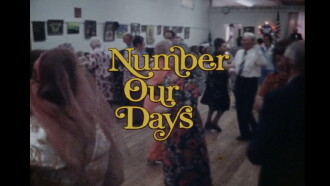
Based on the book by anthropologist Barbara Myerhoff, this Academy Award-winning short documentary offers a tender portrait of a community of elderly yet resilient Jews living, loving, and at times struggling, in Venice, California.
Children Without is a 1964 American short documentary film directed by Charles Guggenheim, about a young girl and her brother growing up in the housing projects of Detroit.
Commissioned by the U.S. Office of War Information, this short film features conductor Arturo Toscanini leading the NBC Symphony Orchestra, tenor Jan Peerce, and the Westminster Choir in Verdi’s Inno delle nazioni.
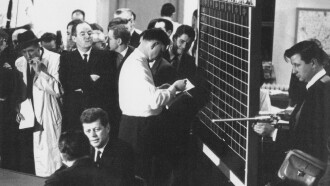
Documenting the maiden voyage of the SS Hope, a hospital ship operated by Project HOPE, where it brought medical care to Indonesia and South Vietnam in 1960-1961.
An atmospheric tribute to the genius of Welsh poet and dramatist Dylan Thomas, using many of the windswept locations where Thomas himself grew up and found his inspiration.
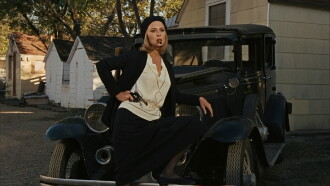
In the 1930s, bored waitress Bonnie Parker falls in love with an ex-con named Clyde Barrow, and together they start a violent crime spree throughout the country, stealing cars and robbing banks.