John H. Whitney Sr. explains the graphic art potential of the computer and the methods and philosophy involved in his computer filmmaking. Preserved by the Academy Film Archive in 2012.
Two young women, frustrated by war rationing, have a dream illustrating the likely results on prices in America should the measure were prematurely lifted.
This fascinating making-of documentary investigates the controversy and political atmosphere surrounding the production of Salt of the Earth, movingly chronicling the filmmakers' defiance of the blacklist.
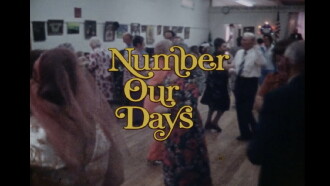
Based on the book by anthropologist Barbara Myerhoff, this Academy Award-winning short documentary offers a tender portrait of a community of elderly yet resilient Jews living, loving, and at times struggling, in Venice, California.
The Vietnam War during the JFK years and beyond. Made in 1972 in the filmmaker's apartment, without documentary footage of the war, metaphors are created through the animation of images and objects, and through guerrilla skits.
Lucía and Valeria take out three Tarot cards that reveal the first two dishes of a menu that takes them from Embún, Spain to Llanquihue, Chile; the towns of their grandmothers.
The encounter of three movies, three territories. A personal story that portrays, through experiments revealed by images and extracts from a diary, lived meetings and inhabited places filled by forces of nature, colors, incidents and struggles.
Alternative movies trailers for Experiments in Motion Graphics
More movie trailers, teasers, and clips from Experiments in Motion Graphics:
John Whitney - Experiments in motion graphics 1968 - Generative graphics
John Whitney Sr. (April 8 1917 – September 22 1995) was an American animator composer and inventor widely considered to be one of the fathers of ...
Popular movie trailers from 1968
These some of the most viewed trailers for movies released in 1968:
Two young boys, play hooky from school in order to explore an ultramodern world's fair. They take in the many marvelous scientific and industrial exhibits, obtain literature, eat food, and generally run amok.
Five criminals are arrested after a bank-robbery. One escapes, and the police officer in charge of transporting them arrests a new person at random to cover up for his negligence.