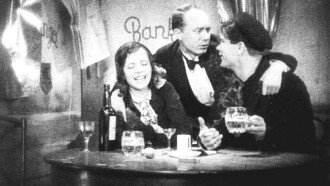
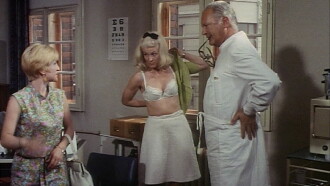
A paean to alcohol as a means of survival to this world, and to the ephemeral communities created by our need not to be alone. On Christmas Eve, between six in the evening and four at night, Klaus Wildenhahn films people who are excluded from this "must be" celebration, and land up in a bar in St. Pauli, Hamburg: truck drivers and prostitutes, regular or casual customers, a coach and an amateur boxer... all desperately in search of happiness, tenderness and sex.
Toftlund-Holst, the tranquil place on the Baltic Sea, just before Christmas: everything could be so contemplative, but the mood in the Torkelsen house is cloudy.
It is about brawls, prostitution, a prison escapee, murder and manslaughter. The film wants to be documentary, the director himself appears as moderator and interviewer.
Illustrates both the powerlessness of the ordinary worker as well as an intimate portrait of the joys and sorrows of a small group of people in the harbor section of Hamburg.
Sometimes your fate lies in the hands of those you meet. Filled with promising ambitions, shattered dreams, love and revenge and in the end hope, the story reveals how tangibly interconnected our induividual fates really are.
Popular movie trailers from 1968
These some of the most viewed trailers for movies released in 1968:
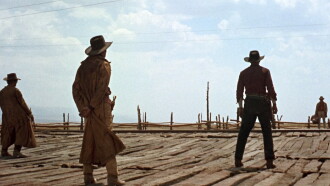
As the railroad builders advance unstoppably through the Arizona desert on their way to the sea, Jill arrives in the small town of Flagstone with the intention of starting a new life.
Centring on the legend of the four ancient Chinese heroines, the film was a novelty for audiences at the time, as the singing performance was in Cantonese and used huangmei operatic rhythms—a popular trend in the 1960s, yet it retained traditional flavours by using operatic luogu percussion in the battle scenes.
"In my film I suggest that there is no greater mystery than that of the protagonists. War and Love are simply equated for what they are; the aftermath is inevitable, and a normal human condition, for which like the ancients one can only have pity and understanding.
Comments
Have you watched Heiligabend auf St. Pauli yet? What did you think about it?