Filmed in 1968, "Little Pioneers" examines the gap between socialist rhetoric and social reality by focusing on children excluded from state protection. Through close, unembellished observation, Želimir Žilnik documents young people living in slum conditions and surviving through informal and illegal means, using the film’s ironic title to underscore the contrast between official ideology and everyday life.
A look into the lives of Malawi's 1 million plus orphans in the wake of the AIDS pandemic. It offers hope and real solutions to the challenges that people face living in extreme poverty.
In Uganda, AIDS-infected mothers have begun writing what they call Memory Books for their children. Aware of the illness, it is a way for the family to come to terms with the inevitable death that it faces.
In this powerful tale about the rise of Korea’s global adoption program, four adult adoptees return to their country of birth and reconnect with their roots, mapping the geographies of kinship that bind them to a homeland they never knew.
Tracing the footsteps of North Korean orphans who went to Poland during the Korean War, two women, one from the North and the other from the South, bond through the solidarity of wound and forge together a path toward healing.
The movie recalls children who suffered mental and physical harm both during the last century, particularly in religious orphanages, and during the time of early modernperiod witch-hunts.
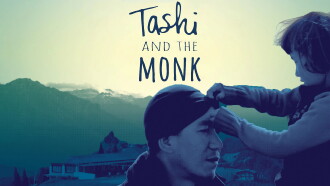
This moving documentary profiles a former Buddhist monk who runs a home for orphaned children in the Himalayas, and his relationship with its newest arrival, troubled five-year-old Tashi.
Anthony Steffen, as a young gunman who works as a circus performer, witnesses the killing of some outlaws, carried out by their leader and is credited with the deed.
"In my film I suggest that there is no greater mystery than that of the protagonists. War and Love are simply equated for what they are; the aftermath is inevitable, and a normal human condition, for which like the ancients one can only have pity and understanding.
Sam Moran is a Honolulu charter-boat captain who leads fishing expeditions in the tropical paradise. When his daughter is found murdered at the party of a wealthy young playboy, he seeks the truth about the murder.
Five criminals are arrested after a bank-robbery. One escapes, and the police officer in charge of transporting them arrests a new person at random to cover up for his negligence.
There's nothing like a good, opulent, gaudy musical to lift the spirits, but when it's a 1960's Hong Kong musical orchestrated by a Japanese director and composer, it breaks through the ranks as a classic of campy kitsch.